Shandong Science ›› 2023, Vol. 36 ›› Issue (1): 107-114.doi: 10.3976/j.issn.1002-4026.2023.01.014

• Traffic and Transportation • Previous Articles     Next Articles

Conditions applicable for ten-lane expressway lane management based on passenger and freight separation

XIONG Wenlei(), ZHUANG Jiafeng, MA Tianyi   

  1. CCCC Second Highway Consultants Co., Ltd., Wuhan 430056,China
  • Received:2022-03-14 Published:2023-02-20 Online:2023-02-08

Abstract:

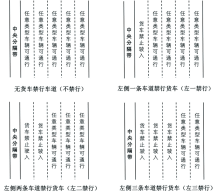
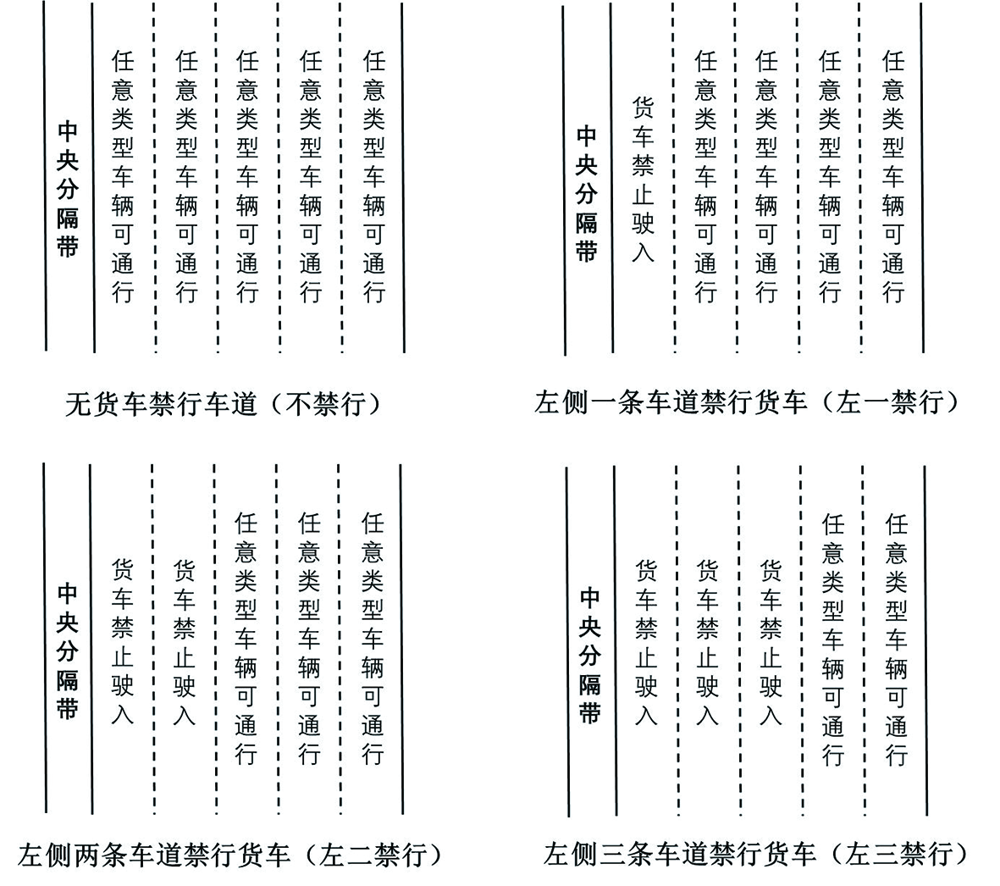
Aiming to resolve the complex traffic environment of a ten-lane expressway, considering the factors of traffic volume and proportion of trucks, a comprehensive test design method is adopted herein. Further, the VISSIM traffic simulation software is used to perform simulation research using four lane-management schemes. Using average speed, traffic capacity, and the number of conflicts as the evaluation indexes, the principal component analysis method is used to construct the lane management-scheme evaluation method. Based on the lane management-scheme scores obtained under multiple combined traffic conditions, the conditions applicable for different lane-management schemes of the ten-lane expressway are proposed. The results show that for the ten-lane expressway,when the traffic volume is≤1 000 pcu/(h·lane), trucks should be prohibited from entering the far-left lane and when the traffic volume is >1 000 pcu/(h·lane) and the proportion of trucks is ≤30%, trucks should be prohibited from entering the three lanes on the left.Further,when the traffic volume is >1 000 pcu/(h·lane) and the proportion of trucks is >30%, trucks should be prohibited from entering the two lanes on the left.

Key words: ten-lane expressway, lane management, principal component analysis, traffic volume, proportion of trucks

CLC Number: 

  • U491.4

Open Access This article is licensed under a Creative Commons Attribution-NonCommercial 4.0 International License (CC BY-NC 4.0), which permits third parties to freely share (i.e., copy and redistribute the material in any medium or format) and adapt (i.e., remix, transform, or build upon the material) the articles published in this journal, provided that appropriate credit is given, a link to the license is provided, and any changes made are indicated. The material may not be used for commercial purposes. For details of the CC BY-NC 4.0 license, please visit: https://creativecommons.org/licenses/by-nc/4.0