Shandong Science


Bicycle-type vehicle detection method using computer vision

LI Bing1*, JIANG Rui2   

  1. 1. College of Mechanical and Electrical Engineering, Northeast Forestry University, Harbin Heilongjiang 150040, China; 2. College of Civil and Transportation Engineering, Northeast Forestry University, Harbin Heilongjiang 150040, China
  • Received:2025-05-26 Accepted:2025-06-19 Online:2026-01-08
  • Contact: LI Bing E-mail:great_libing@163.com

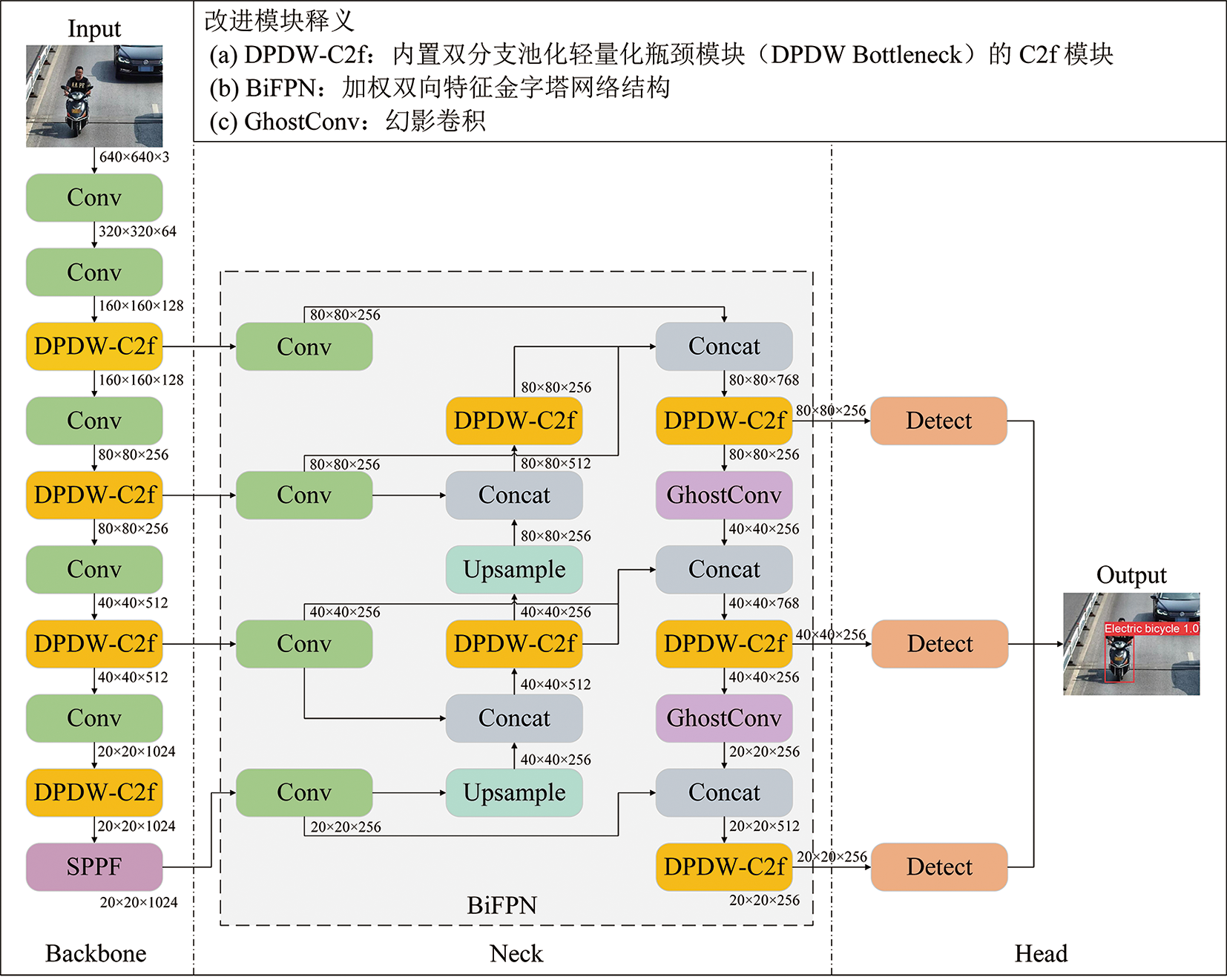
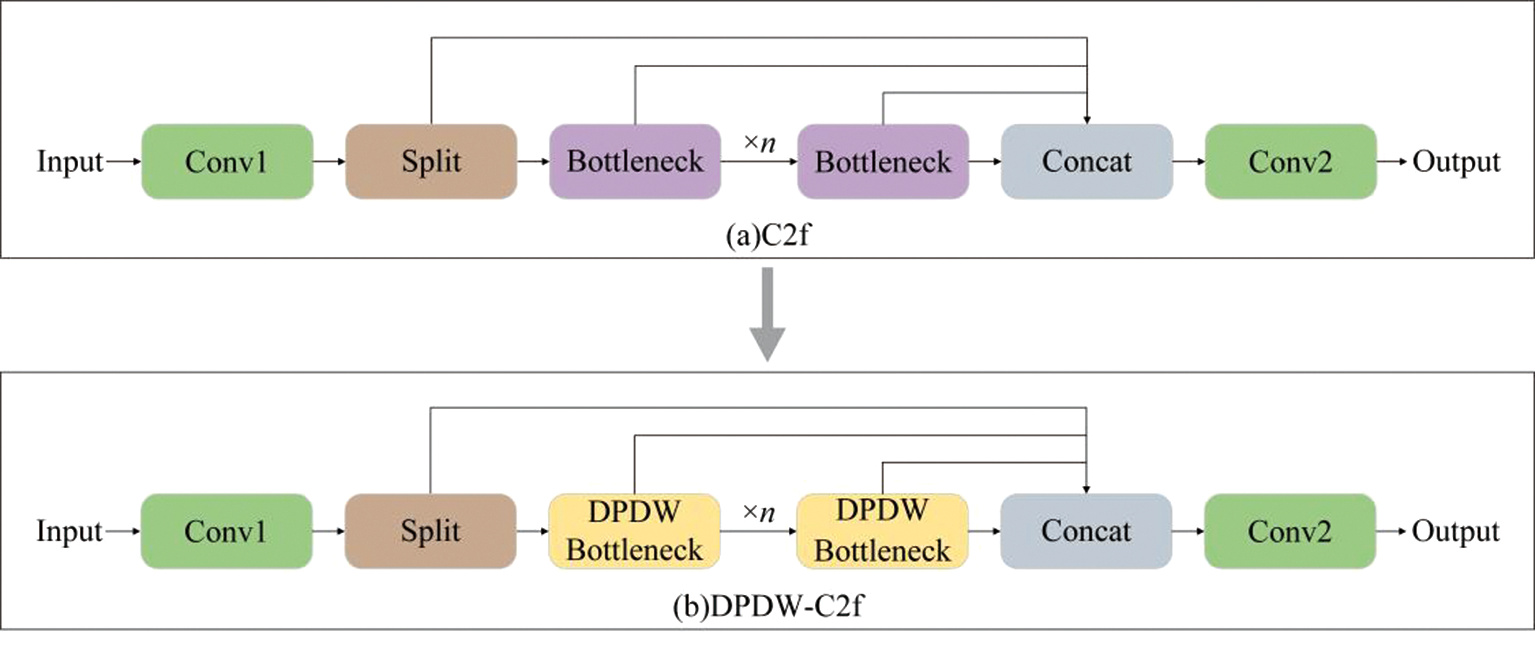
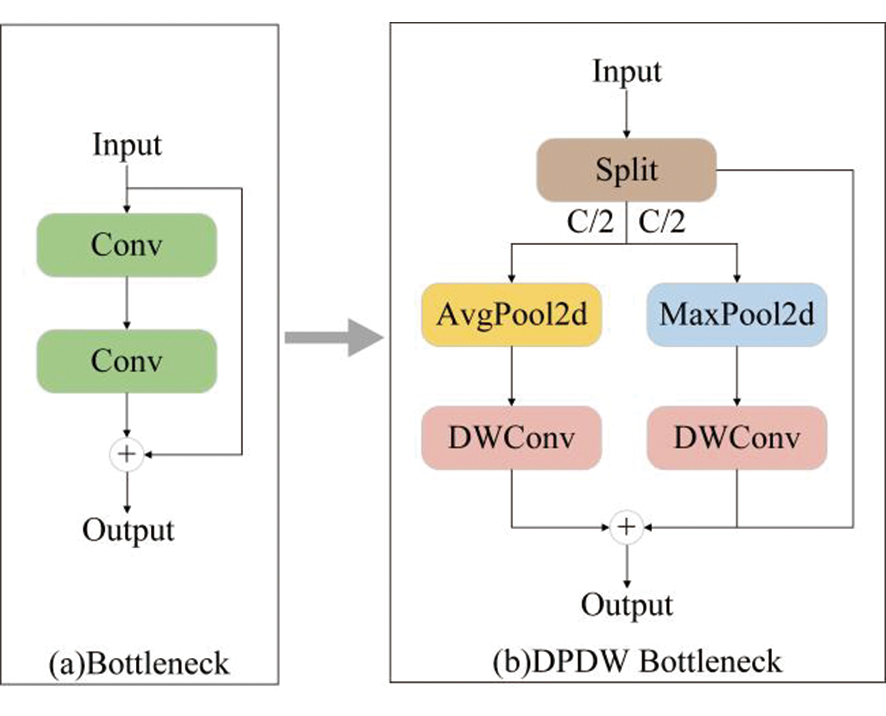
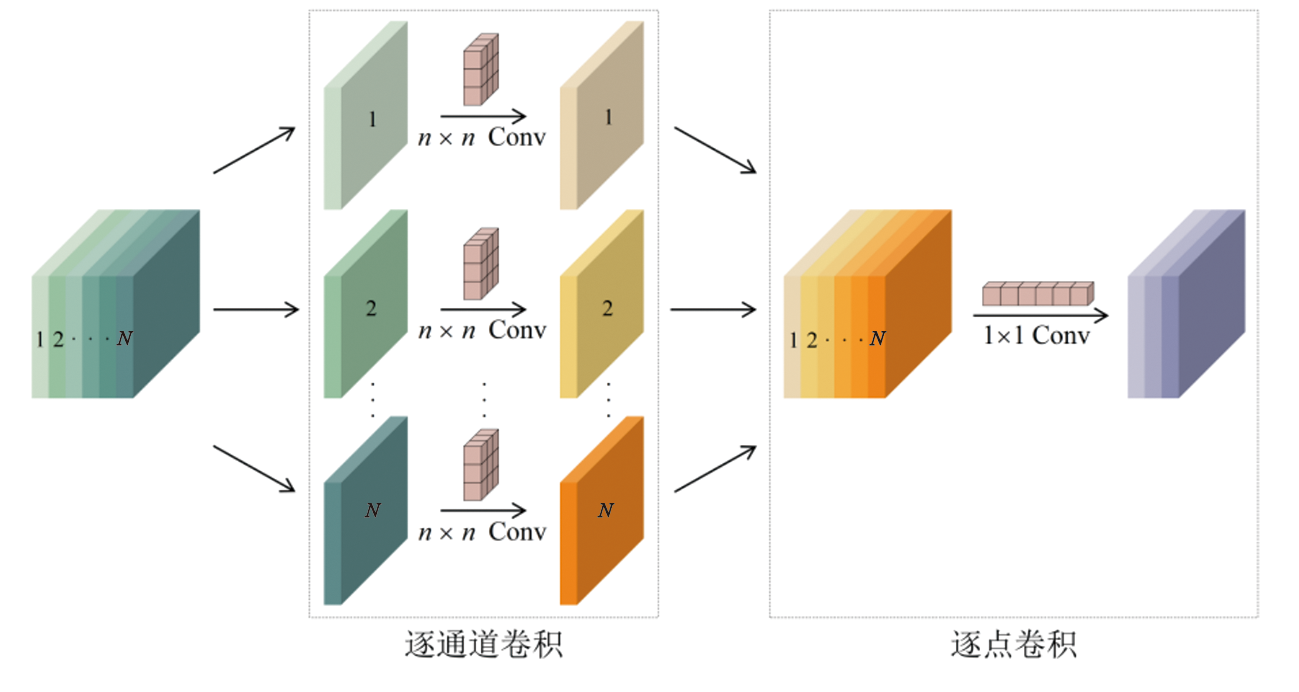
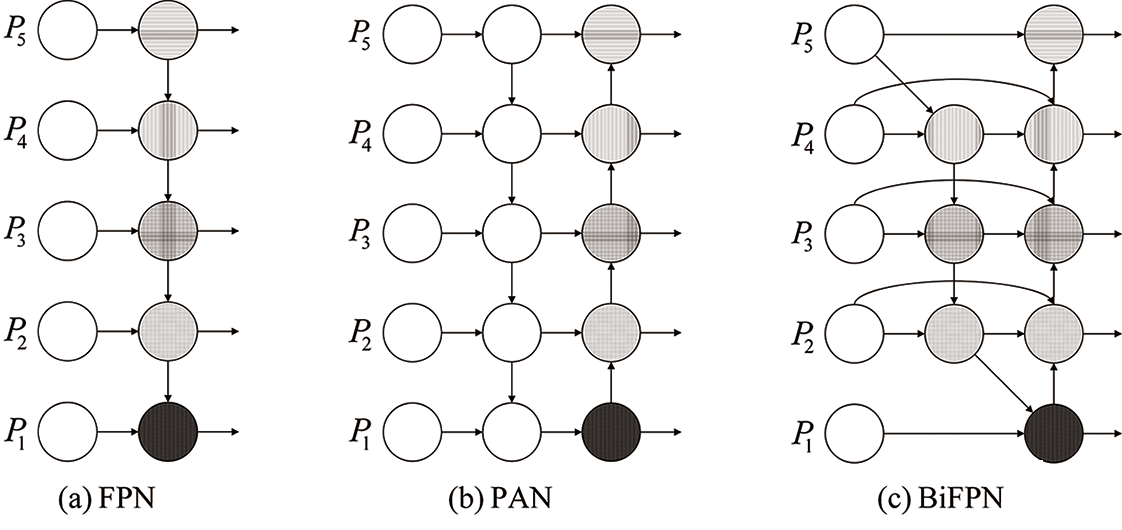
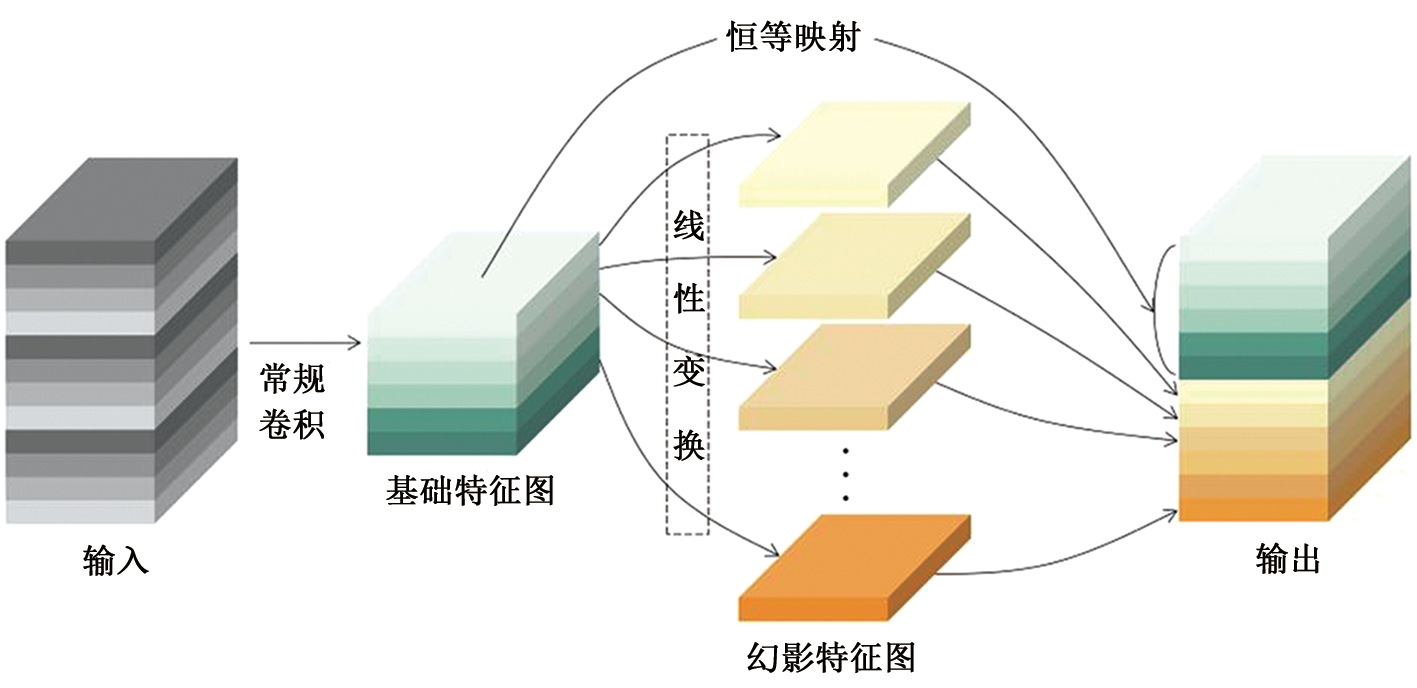
Abstract: To address the challenges of significant scale variations, numerous environmental interferences, high real-time requirements, and the difficulty in achieving a good balance between detection accuracy and computational cost faced by existing bicycle-type vehicle detection models, this study proposes YOLO-DBG, a lightweight and efficient bicycle-type vehicle detection model based on computer vision. First, a novel dual-branch pooling & depthwise separable convolution bottleneck module is designed, which synchronously extracts global contour and local detail features of bicycle-type vehicles through a differentiated feature aggregation strategy, thereby enhancing multiscale feature extraction capabilities and reducing model computational costs by integrating depthwise separable convolution. Second, a weighted bidirectional feature pyramid network architecture is introduced in the neck network, which enhances the fusion of key vehicle features through bidirectional cross-scale connections and a dynamic weighting mechanism, and effectively reduces model computational costs through node pruning. In addition, ghost convolution is used as a downsampling operator, which considerably compresses the model while maintaining the feature expression ability. These three modules work together to construct an effective lightweight network architecture. Experiments demonstrate that the proposed model achieves a 0.2% increase in mean average precision while reducing parameters (Params), giga floating point operations per second, and model size (Model Size) by 55.8%, 37.0%, and 53.1%, respectively. The proposed method achieves ideal lightweighting without compromising detection accuracy, offering a novel solution for real-time detection of bicycle-type vehicles.

Key words: traffic safety, road traffic, deep learning, computer vision, target detection, model lightweighting, bicycle-type vehicles

CLC Number: 

  • U121

Open Access This article is licensed under a Creative Commons Attribution-NonCommercial 4.0 International License (CC BY-NC 4.0), which permits third parties to freely share (i.e., copy and redistribute the material in any medium or format) and adapt (i.e., remix, transform, or build upon the material) the articles published in this journal, provided that appropriate credit is given, a link to the license is provided, and any changes made are indicated. The material may not be used for commercial purposes. For details of the CC BY-NC 4.0 license, please visit: https://creativecommons.org/licenses/by-nc/4.0