

Shandong Science ›› 2026, Vol. 39 ›› Issue (2): 8-19.doi: 10.3976/j.issn.1002-4026.2025118
• Electronic Materials and Devices • Previous Articles Next Articles
LIU Mei( )
)
Received:2025-10-11
Revised:2025-10-16
Published:2026-04-20
Online:2025-12-11
CLC Number:
LIU Mei. Applications of π-conjugated organic small molecules in surface-enhanced Raman spectroscopy[J].Shandong Science, 2026, 39(2): 8-19.
Add to citation manager EndNote|Reference Manager|ProCite|BibTeX|RefWorks
URL: https://www.sdkx.net/EN/10.3976/j.issn.1002-4026.2025118
Fig.1
Schematic showing the role of π-conjugated organic small molecules in SERS enhancement mechanisms and applications"
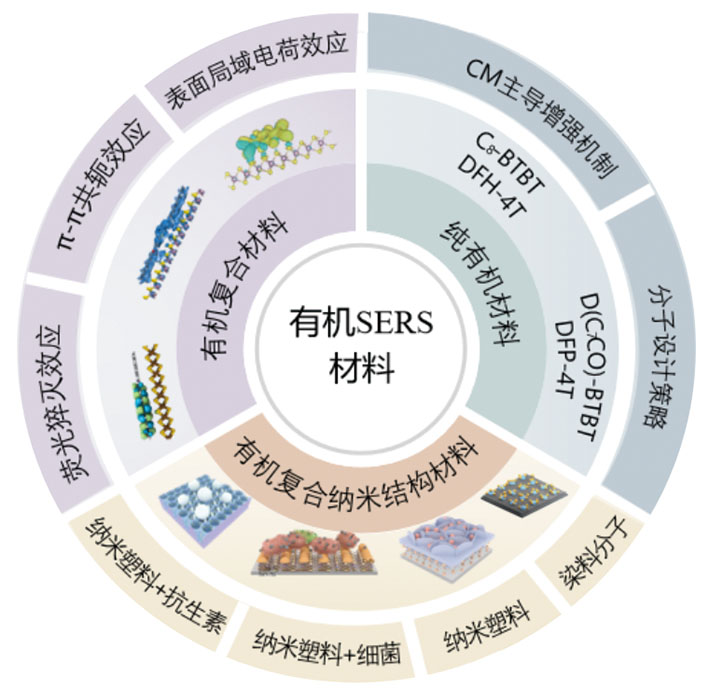
Fig.2
Molecular structures and SERS performance of a typical π-conjugated organic small molecule[31]"
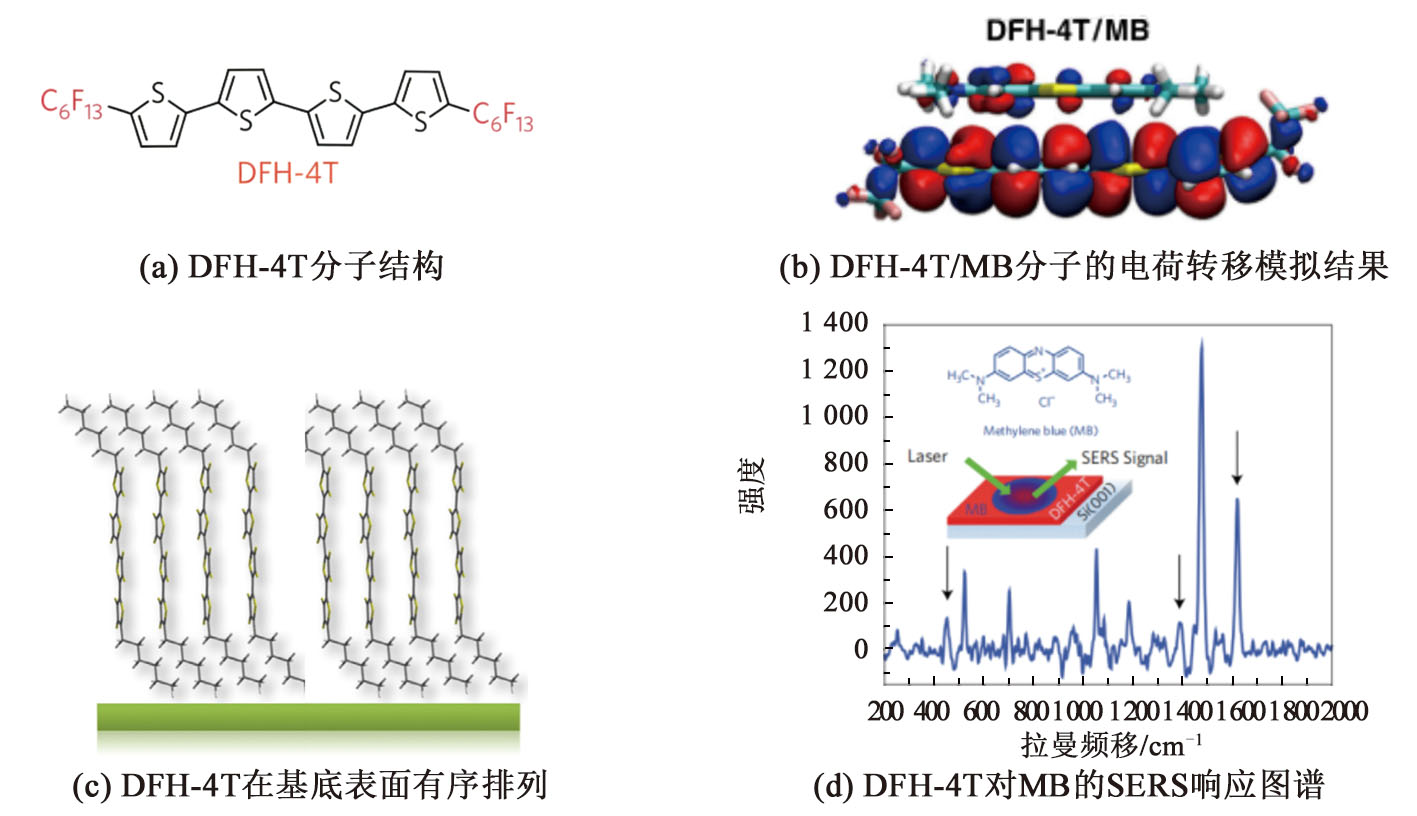
Fig.3
Structure and SERS performance of F4TCNQ/MoS2 composite"
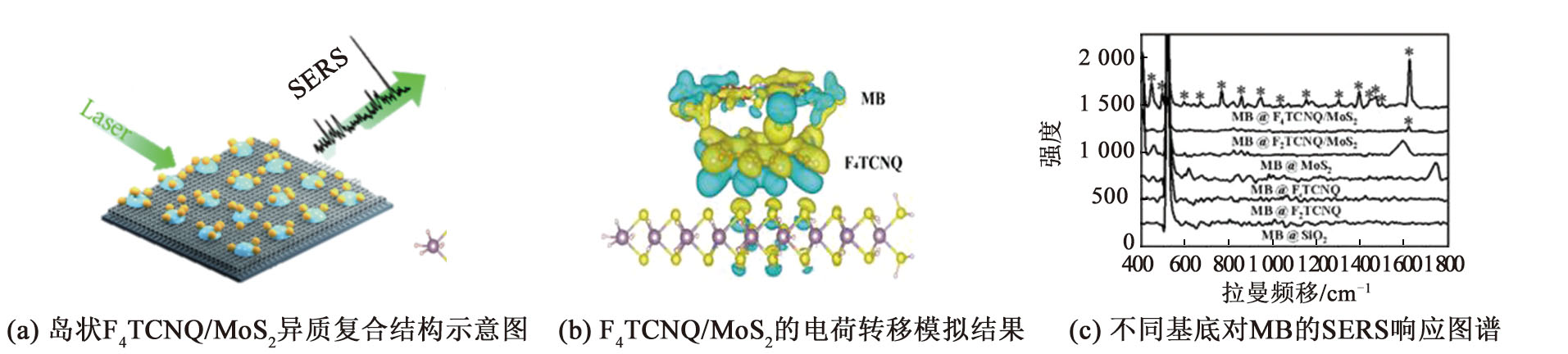
Fig.4
SERS activity, electromagnetic field distribution, and charge-transfer characteristics of CuPc/MoS2"
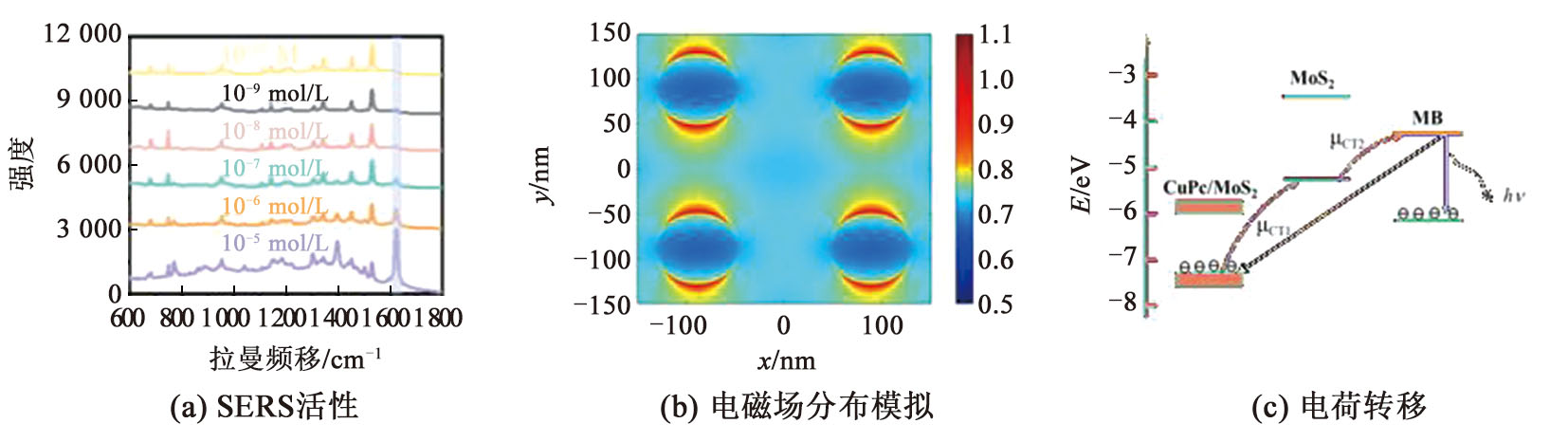
Fig.5
Structure, energy level, and SERS performance of D(C7CO)-BTBT/MoS2"
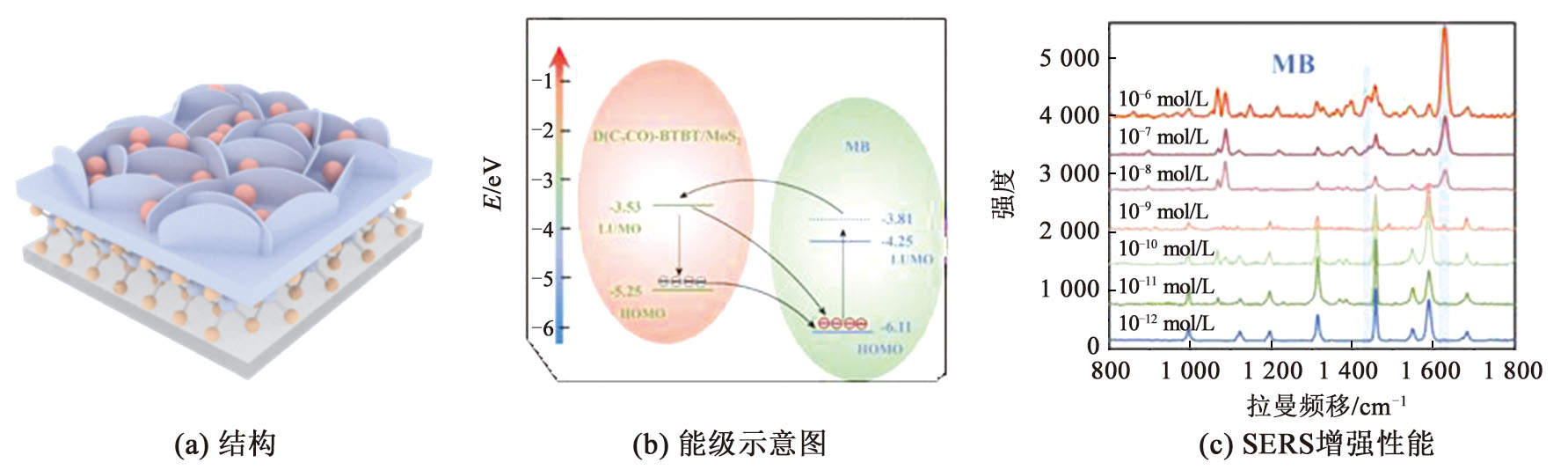
Fig.6
Design of a V-type F4TCNQ/MoS2/AAO nanocavity coupling enhancement structure"
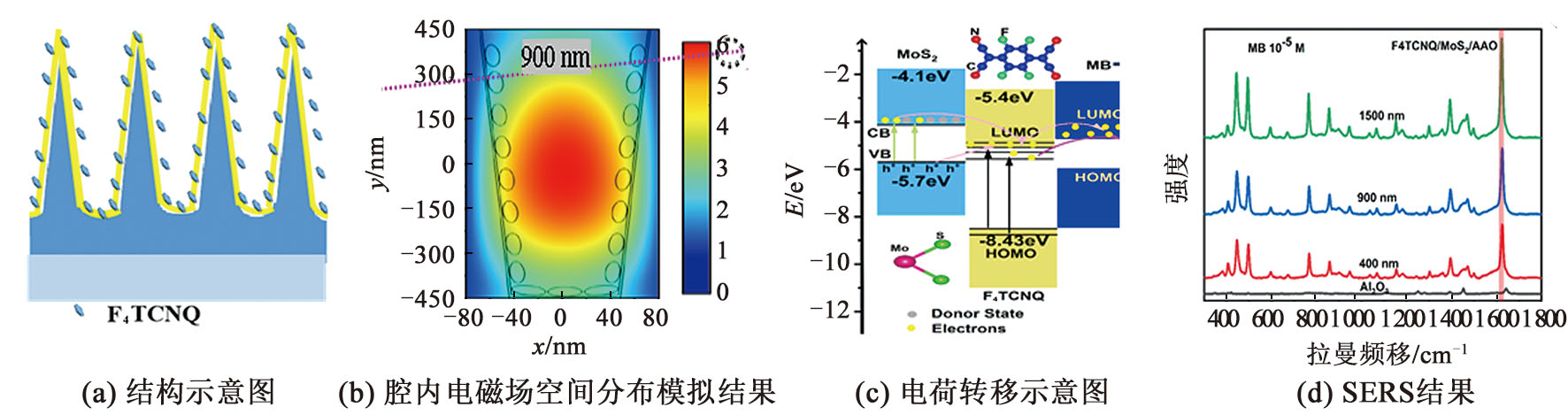
Fig.7
SERS detection and simulation of PS nanoparticles on D(C7CO)-BTBT/MoS2 nanowall"
Fig.8
SERS study of nanoplastic-bacteria interactions using CuPc/MoS2 composite substrate"
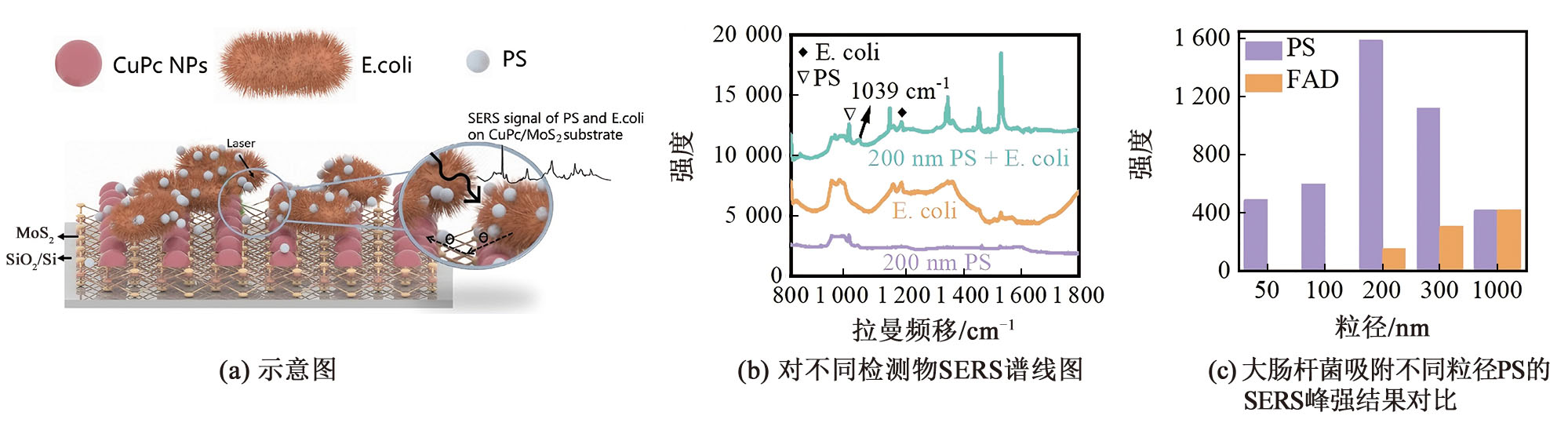
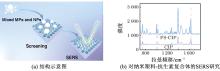
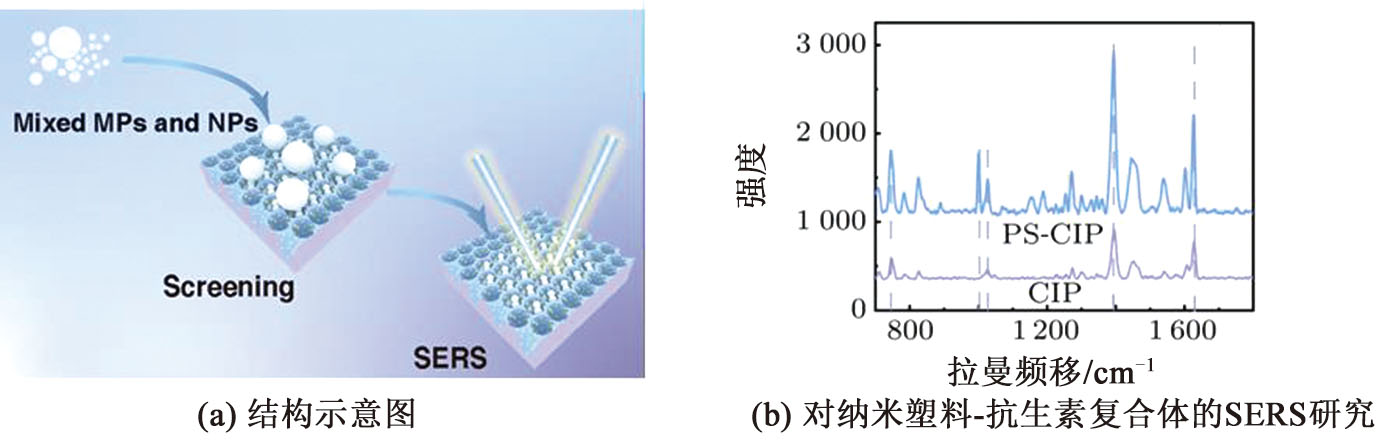
Fig.9
SERS investigation of nanoplastic-antibiotic complexes using F4TCNQ/MoS2-AAO cavity"
| [1] | KNEIPP K, WANG Y, KNEIPP H, et al. Single molecule detection using surface-enhanced Raman scattering (SERS)[J]. Physical Review Letters, 1997, 78(9): 1667-1670. DOI: 10.1103/PhysRevLett.78.1667. |
| [2] | FLEISCHMANN M, HENDRA P J, MCQUILLAN A J. Raman spectra of pyridine adsorbed at a silver electrode[J]. Chemical Physics Letters, 1974, 26(2): 163-166. DOI: 10.1016/0009-2614(74)85388-1. |
| [3] | JEANMAIRE D L, VAN DUYNE R P. Surface Raman spectroelectrochemistry: part I. Heterocyclic, aromatic, and aliphatic amines adsorbed on the anodized silver electrode[J]. Journal of Electroanalytical Chemistry and Interfacial Electrochemistry, 1977, 84(1): 1-20. DOI: 10.1016/S0022-0728(77)80224-6. |
| [4] | SHARMA B, FRONTERA R R, HENRY A I, et al. SERS: Materials, applications, and the future[J]. Materials Today, 2012, 15(1/2): 16-25. DOI: 10.1016/S1369-7021(12)70017-2. |
| [5] |
ALESSANDRI I, LOMBARDI J R. Enhanced Raman scattering with dielectrics[J]. Chemical Reviews, 2016, 116(24): 14921-14981. DOI: 10.1021/acs.chemrev.6b00365.
pmid: 27739670 |
| [6] |
FANG Y, SEONG N H, DLOTT D D. Measurement of the distribution of site enhancements in surface-enhanced Raman scattering[J]. Science, 2008, 321(5887): 388-392. DOI: 10.1126/science.1159499.
pmid: 18583578 |
| [7] |
SUN Y, XIA Y. Shape-controlled synthesis of gold and silver nanoparticles[J]. Science, 2002, 298(5601): 2176-2179. DOI: 10.1126/science.1077229.
pmid: 12481134 |
| [8] | LEE P C, MEISEL D. Adsorption and surface-enhanced Raman of dyes on silver and gold sols[J]. The Journal of Physical Chemistry, 1982, 86(17): 3391-3395. DOI: 10.1021/j100214a025. |
| [9] |
LING X, XIE L, FANG Y, et al. Can graphene be used as a substrate for Raman enhancement?[J]. Nano Letters, 2010, 10(2): 553-561. DOI: 10.1021/nl903414x.
pmid: 20039694 |
| [10] |
LEE H K, LEE Y H, KOH C S L, et al. Designing surface-enhanced Raman scattering (SERS) platforms beyond hotspot engineering: emerging opportunities in analyte manipulations and hybrid materials[J]. Chemical Society Reviews, 2019, 48(3): 731-756. DOI: 10.1039/C7CS00786H.
pmid: 30475351 |
| [11] |
JENSEN L, AIKENS C M, SCHATZ G C. Electronic structure methods for studying surface-enhanced Raman scattering[J]. Chemical Society Reviews, 2008, 37(5): 1061-1073. DOI: 10.1039/B706023H.
pmid: 18443690 |
| [12] | LOMBARDI J R, BIRKE R L. Theory of surface-enhanced Raman scattering in semiconductors[J]. The Journal of Physical Chemistry C, 2014, 118(20): 11120-11130. DOI: 10.1021/jp503147u. |
| [13] |
LOMBARDI J R, BIRKE R L. A unified view of surface-enhanced Raman scattering[J]. Accounts of Chemical Research, 2009, 42(6): 734-742. DOI: 10.1021/ar800249y.
pmid: 19361212 |
| [14] | LI J F, HUANG Y F, DING Y, et al. Shell-isolated nanoparticle-enhanced Raman spectroscopy[J]. Nature, 2010, 464(7287): 392-395. DOI: 10.1038/nature08907. |
| [15] |
TAO L, CHEN K, CHEN Z, et al. 1T' transition metal telluride atomic layers for plasmon-free SERS at femtomolar levels[J]. Journal of the American Chemical Society, 2018, 140(28): 8696-8704. DOI: 10.1021/jacs.8b02999.
pmid: 29927248 |
| [16] |
ZHENG Z, CONG S, GONG W, et al. Semiconductor SERS enhancement enabled by oxygen incorporation[J]. Nature Communications, 2017, 8(1): 1993. DOI: 10.1038/s41467-017-02166-z.
pmid: 29222510 |
| [17] | SUN L, HU H, ZHAN D, et al. Plasma modified MoS2 nanoflakes for surface enhanced Raman scattering[J]. Small, 2014, 10(6): 1090-1095. DOI: 10.1002/smll.201301840. |
| [18] | YIN Y, MIAO P, ZHANG Y, et al. Significantly increased Raman enhancement on MoX2 (X=S,Se) monolayers upon phase transition[J]. Advanced Functional Materials, 2017, 27(19): 1606694. DOI: 10.1002/adfm.201606694. |
| [19] | YIN Z, XU K, JIANG S, et al. Recent progress on two-dimensional layered materials for surface enhanced Raman spectroscopy and their applications[J]. Materials Today Physics, 2021, 18: 100378. DOI: 10.1016/j.mtphys.2021.100378. |
| [20] | MENG L, HU S, XU C, et al. Surface enhanced Raman effect on CVD growth of WS2 film[J]. Chemical Physics Letters, 2018, 707: 71-74. DOI: 10.1016/j.cplett.2018.07.038. |
| [21] | SARYCHEVA A, MAKARYAN T, MALESKI K, et al. Two-dimensional titanium carbide (MXene) as surface-enhanced Raman scattering substrate[J]. The Journal of Physical Chemistry C, 2017, 121(36): 19983-19988. DOI: 10.1021/acs.jpcc.7b08180. |
| [22] | LIU M, SHI Y, WU M, et al. UV surface-enhanced Raman scattering properties of SnSe2 nanoflakes[J]. Journal of Raman Spectroscopy, 2020, 51(7): 1136-1143. DOI: 10.1002/jrs.5875. |
| [23] |
LIU M, SHI Y, ZHANG G, et al. Surface-enhanced Raman spectroscopy of two-dimensional tin diselenide nanoplates[J]. Applied Spectroscopy, 2018, 72(11): 1613-1620. DOI: 10.1177/0003702818794685.
pmid: 30063384 |
| [24] | ZHANG Y, SHI Y, WU M, et al. Synthesis and surface-enhanced Raman scattering of ultrathin SnSe2 nanoflakes by chemical vapor deposition[J]. Nanomaterials, 2018, 8(7): 515. DOI: 10.3390/nano8070515. |
| [25] | TIAN Y, WEI H, XU Y, et al. Influence of SERS activity of SnSe2 nanosheets doped with sulfur[J]. Nanomaterials, 2020, 10(10): 1910. DOI: 10.3390/nano10101910. |
| [26] | CONG S, LIU X, JIANG Y, et al. Surface enhanced Raman scattering revealed by interfacial charge-transfer transitions[J]. The Innovation, 2020, 1(3): 100051. DOI: 10.1016/j.xinn.2020.100051. |
| [27] | SENTHILKUMAR N, PARK S, KANG H S, et al. Performance characteristics of p-i-n hetero-junction organic photovoltaic cell with CuPc:F4-TCNQ hole transport layer[J]. Journal of Industrial and Engineering Chemistry, 2011, 17(4): 799-804. DOI: 10.1016/j.jiec.2011.05.022. |
| [28] | WANG J L, XIAO F, YAN J, et al. Difluorobenzothiadiazole-based small-molecule organic solar cells with 8.7% efficiency by tuning of π-conjugated spacers and solvent vapor annealing[J]. Advanced Functional Materials, 2016, 26(11): 1803-1812. DOI: 10.1002/adfm.201505020. |
| [29] | WU Y, CHEN Y, LI D, et al. Interface engineering of organic-inorganic heterojunctions with enhanced charge transfer[J]. Applied Catalysis B: Environmental, 2022, 309: 121261. DOI: 10.1016/j.apcatb.2022.121261. |
| [30] | JI L F, FAN J X, ZHANG S F, et al. Theoretical study on the charge transport in single crystals of TCNQ, F2-TCNQ and F4-TCNQ[J]. Physical Chemistry Chemical Physics, 2018, 20(5): 3784-3794. DOI: 10.1039/c7cp07189b. |
| [31] |
YILMAZ M, BABUR E, OZDEMIR M, et al. Nanostructured organic semiconductor films for molecular detection with surface-enhanced Raman spectroscopy[J]. Nature Materials, 2017, 16(9): 918-924. DOI: 10.1038/nmat4957.
pmid: 28783157 |
| [32] | YILMAZ M, OZDEMIR M, ERDOGAN H, et al. Micro-/nanostructured highly crystalline organic semiconductor films for surface-enhanced Raman spectroscopy applications[J]. Advanced Functional Materials, 2015, 25(35): 5669-5676. DOI: 10.1002/adfm.201502151.1616-301X. |
| [33] |
DEMIREL G, GIESEKING R L M, OZDEMIR R, et al. Molecular engineering of organic semiconductors enables noble metal-comparable SERS enhancement and sensitivity[J]. Nature Communications, 2019, 10: 5502. DOI: 10.1038/s41467-019-13505-7.
pmid: 31796731 |
| [34] |
ZHENG Z, CONG S, GONG W, et al. Semiconductor SERS enhancement enabled by oxygen incorporation[J]. Nature Communications, 2017, 8: 1993. DOI: 10.1038/s41467-017-02166-z.
pmid: 29222510 |
| [35] |
DENEME I, LIMAN G, CAN A, et al. Enabling three-dimensional porous architectures via carbonyl functionalization and molecular-specific organic-SERS platforms[J]. Nature Communications, 2021, 12: 6119. DOI: 10.1038/s41467-021-26385-7.
pmid: 34675208 |
| [36] | HAN J, WANG F, HAN S, et al. Recent progress in 2D inorganic/organic charge transfer heterojunction photodetectors[J]. Advanced Functional Materials, 2022, 32(34): 2205150. DOI: 10.1002/adfm.202205150. |
| [37] | LIU M, LIU W, ZHANG W, et al. π-conjugated small organic molecule-modified 2D MoS2 with a charge-localization effect enabling direct and sensitive SERS detection[J]. ACS Applied Materials & Interfaces, 2022, 14(51): 56975-56985. DOI: 10.1021/acsami.2c17277. |
| [38] | 刘文英, 王公堂, 段鹏怡, 等. F4TCNQ/MoS2纳米复合异质材料的表面结构对SERS的影响[J]. 物理学报, 2023, 72(3): 037402. DOI: 10.7498/aps.72.20221958. |
| [39] | LYU B, LYU Y, MA L, et al. Fluorescence quenching SERS detection: a 2D MoS2 platform modified with a large π-conjugated organic molecule for bacterial detection[J]. Laser & Photonics Reviews, 2025: 2401831. DOI: 10.1002/lpor.202401831. |
| [40] | LIU M, ZHANG C, OU C, et al. Heterostructured organic/MoS2 nanowall with synergistic SERS enhancement enabling direct and sensitive detection of contaminants[J]. Sensors and Actuators B: Chemical, 2024, 401: 135007. DOI: 10.1016/j.snb.2023.135007. |
| [41] | RAHIM A, MA L, SALEEM M, et al. V-shaped heterostructure nanocavities array with CM and EM coupled enhancement for ultra-sensitive SERS substrate[J]. Advanced Science, 2024, 11(48): 2409838. DOI: 10.1002/advs.202409838. |
| [42] | LIU Z Y, SOKRATIAN A, DUDA A M, et al. Anionic nanoplastic contaminants promote Parkinson’s disease-associatedα-synuclein aggregation[J]. Science Advances, 2023, 9(46): eadi8716. DOI: 10.1126/sciadv.adi8716. |
| [43] | LIN S, ZHANG H, WANG C, et al. Metabolomics reveal nanoplastic-induced mitochondrial damage in human liver and lung cells[J]. Environmental Science & Technology, 2022, 56(17): 12483-12493. DOI: 10.1021/acs.est.2c03980. |
| [44] |
IVLEVA N P. Chemical analysis of microplastics and nanoplastics: challenges, Advanced Methods, and Perspectives[J]. Chemical Reviews, 2021, 121(19): 11886-11936. DOI: 10.1021/acs.chemrev.1c00178.
pmid: 34436873 |
| [45] | VÉLEZ-ESCAMILLA L Y, CONTRERAS-TORRES F F. Latest advances and developments to detection of micro- and nanoplastics using surface-enhanced Raman spectroscopy[J]. Particle & Particle Systems Characterization, 2022, 39(3): 2100217. DOI: 10.1002/ppsc.202100217. |
| [46] | QIAN N, GAO X, LANG X, et al. Rapid single-particle chemical imaging of nanoplastics by SRS microscopy[J]. Proceedings of the National Academy of Sciences of the United States of America, 2024, 121(3): e2300582121. DOI: 10.1073/pnas.2300582121. |
| [47] | MA L, RAHIM A, LYU B, et al. Synergistic SERS effects in organic/MoS2 heterojunctions with cavity structure enabling nanoplastics screening and antibiotic adsorption behavior detection[J]. Chinese Physics B, 2025, 34(4): 047402. DOI: 10.1088/1674-1056/ada888. |
| [48] | ZHANG J, ZHOU M, LI X, et al. Recent advances of fluorescent sensors for bacteria detection-A review[J]. Talanta, 2023, 254: 124133. DOI: 10.1016/j.talanta.2022.124133. |
| [49] |
DAI S, YE R, HUANG J, et al. Distinct lipid membrane interaction and uptake of differentially charged nanoplastics in bacteria[J]. Journal of Nanobiotechnology, 2022, 20(1): 191. DOI: 10.1186/s12951-022-01321-z.
pmid: 35428303 |
| [50] |
LIN C, LI Y, PENG Y, et al. Recent development of surface-enhanced Raman scattering for biosensing[J]. Journal of Nanobiotechnology, 2023, 21(1): 149. DOI: 10.1186/s12951-023-01890-7.
pmid: 37149605 |
|
||

Open Access This article is licensed under a Creative Commons Attribution-NonCommercial 4.0 International License (CC BY-NC 4.0), which permits third parties to freely share (i.e., copy and redistribute the material in any medium or format) and adapt (i.e., remix, transform, or build upon the material) the articles published in this journal, provided that appropriate credit is given, a link to the license is provided, and any changes made are indicated. The material may not be used for commercial purposes. For details of the CC BY-NC 4.0 license, please visit: https://creativecommons.org/licenses/by-nc/4.0
