Shandong Science ›› 2023, Vol. 36 ›› Issue (4): 97-103.doi: 10.3976/j.issn.1002-4026.2023.04.012

• Environment and Ecology • Previous Articles     Next Articles

Preparation and performance of sustained-release encapsulated gel breaker

HUANG Xiaolei(), DING Wei*()   

  1. College of Chemistry and Chemical Engineering, Northeast Petroleum University, Daqing 163318, China
  • Received:2022-07-07 Published:2023-08-20 Online:2023-08-03

Abstract:

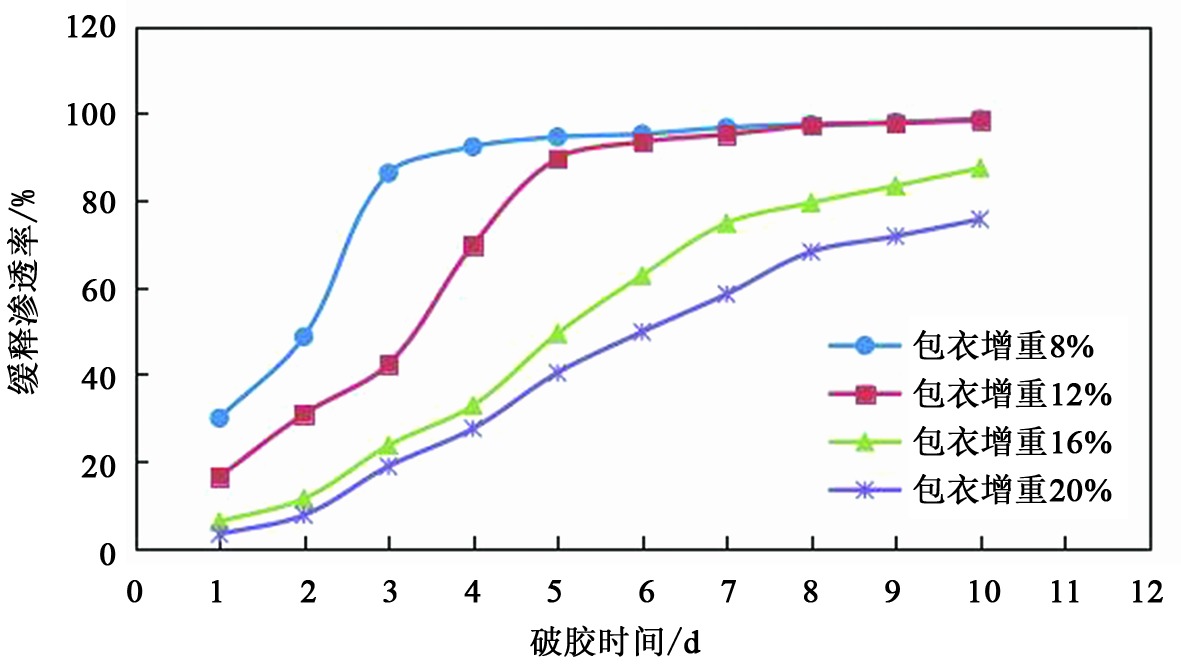
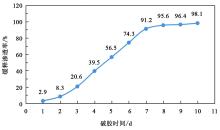
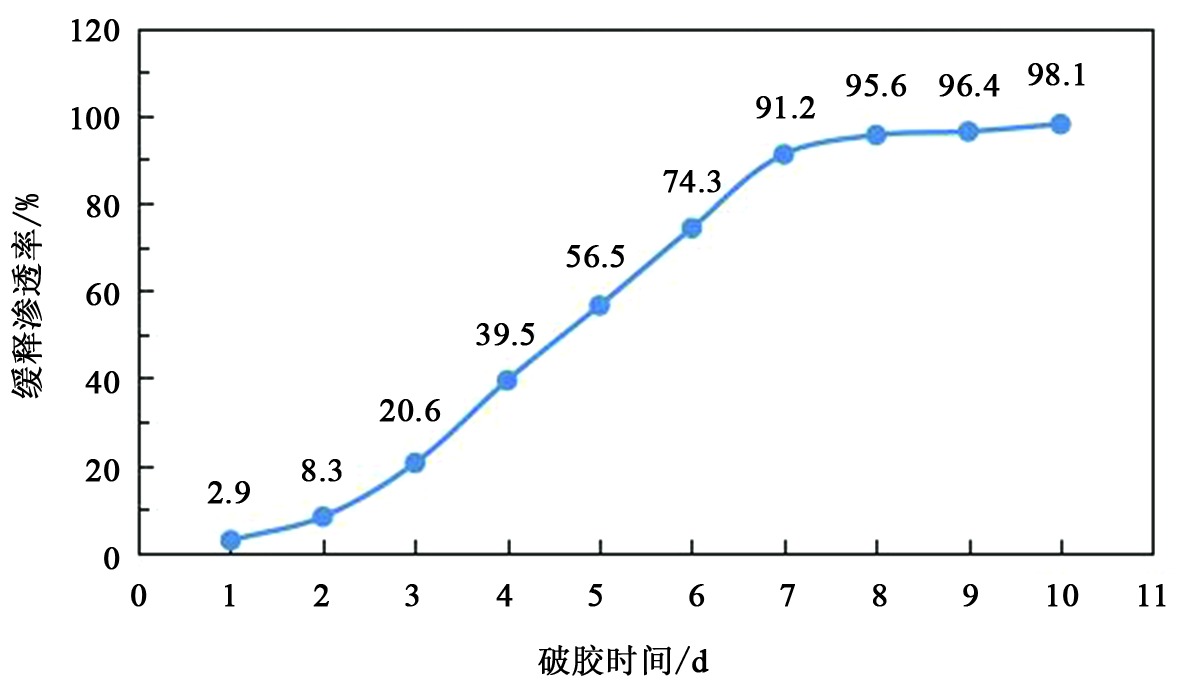
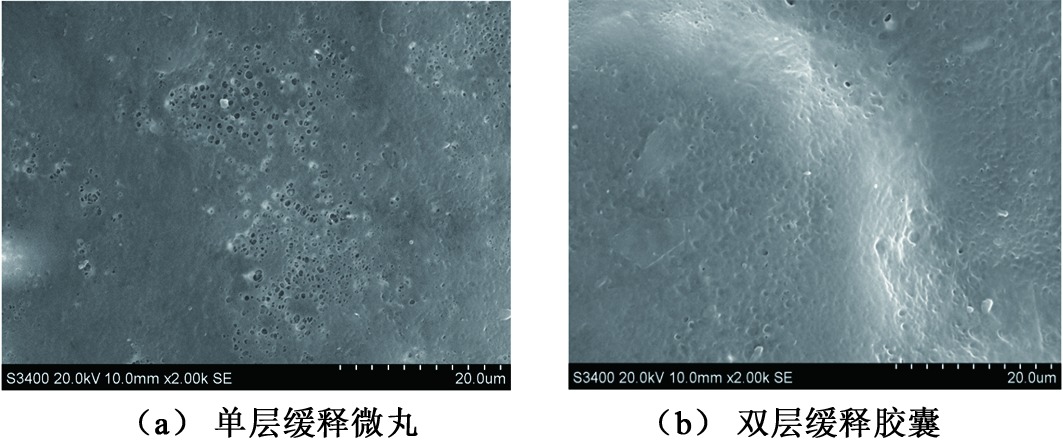
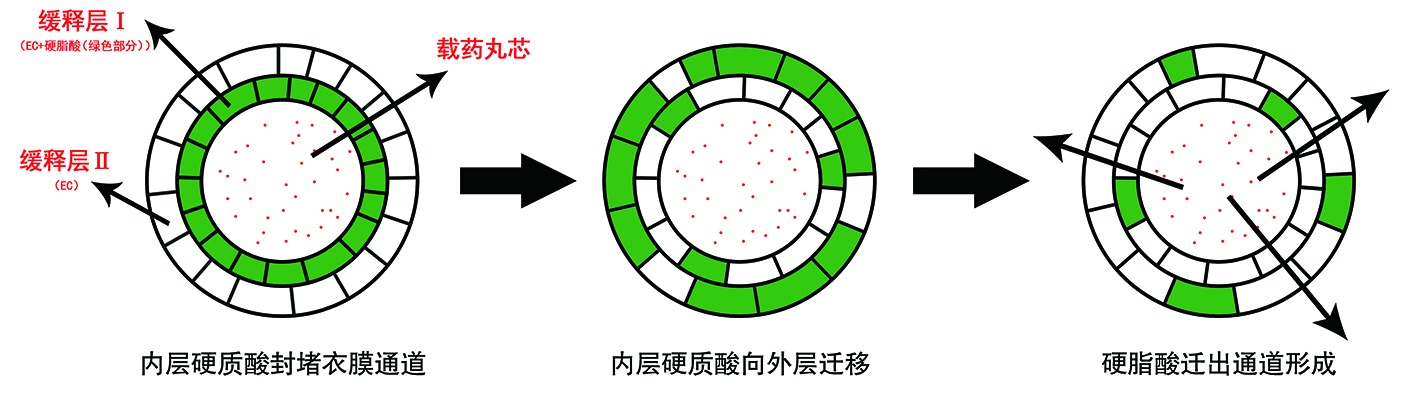
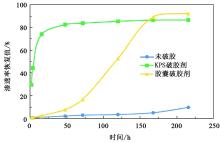
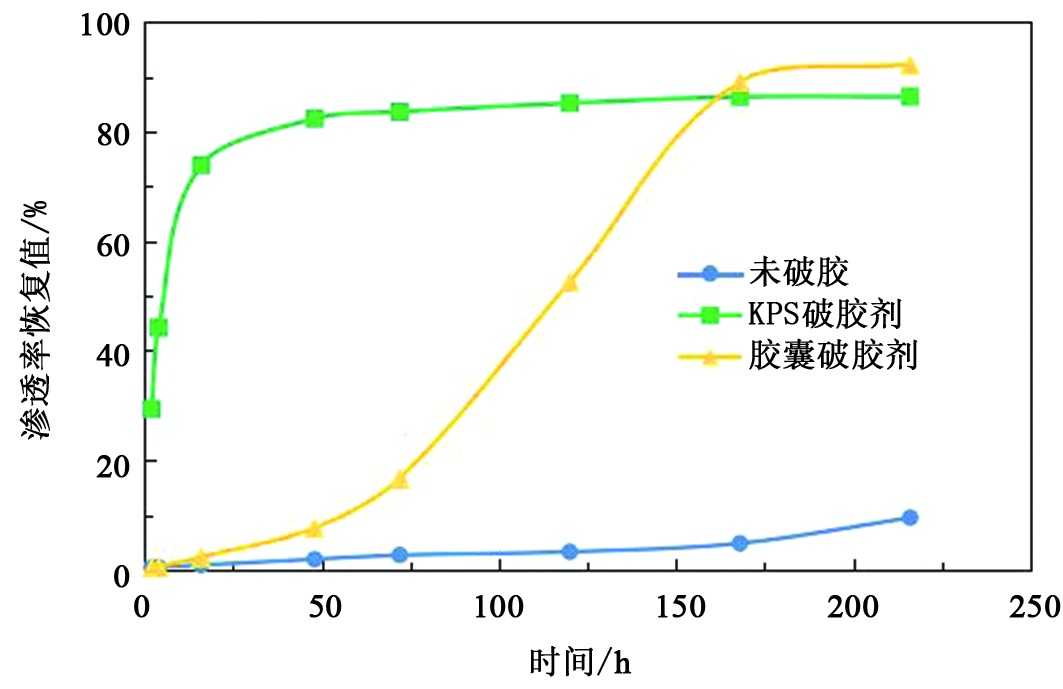
During oilfield workover, it is necessary to control the gel breaking speed of the temporary plugging agent, so that the gel is not broken during the workover to ensure the completion of the operation and is broken quickly after the workover to resume production. For traditional gel breakers, it is difficult to achieve a slow release at the initial stage and a fast release at the late of the workover. This paper describes a cellulose-based sustained-release encapsulated gel breaker with a double-layer film. This gel breaker is evenly mixed with molted Carnauba wax and the solid dispersion pellet is made using the extrusion-speronization method. In the Wurster fluidized bed, a double-layer film with different components is put on the pellet to prepare the sustained-release encapsulated gel breaker. The result of the orthogonal test shows that this method is reliable, the yield of the pellet is 93.2%. SEM result shows that the film on the surface of the pellet is smooth and uniform, and the sealing and unblocking of the film pores are crucial to sustained-release. The results of sustained-release test and simulation test of reservoir gel breaking exhibit that the sustained-release encapsulated gel breaker has an excellent controlled-release effect and reservoir permeability recovery effect. Herein, the preparation method is simple and efficient. The sustained-release of drugs is mainly controlled by the double-layer film.

Key words: double-layer sustained-release film, solid dispersion, extrusion-spheronization, Wurster fluidized bed

CLC Number: 

  • TE357.12

Open Access This article is licensed under a Creative Commons Attribution-NonCommercial 4.0 International License (CC BY-NC 4.0), which permits third parties to freely share (i.e., copy and redistribute the material in any medium or format) and adapt (i.e., remix, transform, or build upon the material) the articles published in this journal, provided that appropriate credit is given, a link to the license is provided, and any changes made are indicated. The material may not be used for commercial purposes. For details of the CC BY-NC 4.0 license, please visit: https://creativecommons.org/licenses/by-nc/4.0