山东科学 ›› 2026, Vol. 39 ›› Issue (2): 98-107.doi: 10.3976/j.issn.1002-4026.20260011

• 先进材料制备与加工技术 • 上一篇    下一篇

TIG焊接电流对生物医用高氮奥氏体不锈钢接头组织与力学性能的影响

王朝阳1(), 殷子强2a,2b,*(), 段鹏2a,2b, 姚鑫2a,2b, 展琰2a,2b, 任远2b, 成巍2b   

  1. 1 山东省疾病预防控制中心, 山东 济南 250014
    2 济南大学 a.机械工程学院, b.山东省金属关键构件表面处理与智能装备重点实验室, 山东 济南 250022
  • 收稿日期:2026-01-09 修回日期:2026-01-20 出版日期:2026-04-20 上线日期:2026-04-03
  • 通信作者: *殷子强,男,副教授, E-mail: me_yinzq@ujn.edu.cn
  • 作者简介:王朝阳(1974 —),男,工程师,研究方向为工程技术.E-mail: 13145405737@163.com
  • 基金资助:
    国家自然基金(51305245);山东省自然科学基金(ZR2020ME150);山东省科技型中小企业创新能力提升工程项目(2024TSG0130);山东省科技型中小企业创新能力提升工程项目(2024TSG0111);山东省科技型中小企业创新能力提升工程项目(2022TSGC1130)

Effects of TIG welding current on the microstructure and mechanical properties of biomedical high-nitrogen austenitic stainless steel joints

WANG Chaoyang1(), YIN Ziqiang2a,2b,*(), DUAN Peng2a,2b, YAO Xin2a,2b, ZHAN Yan2a,2b, REN Yuan2b, CHENG Wei2b   

  1. 1 Shandong Provincial Center for Disease Control and Prevention, Jinan 250014, China
    2 University of Jinan, a. School of Mechanical Engineering, b. Shandong Provincial Key Laboratory of Surface Treatmentand Intelligent Equipment for Metal Key Components, Jinan 250022, China
  • Received:2026-01-09 Revised:2026-01-20 Published:2026-04-20 Online:2026-04-03

摘要:

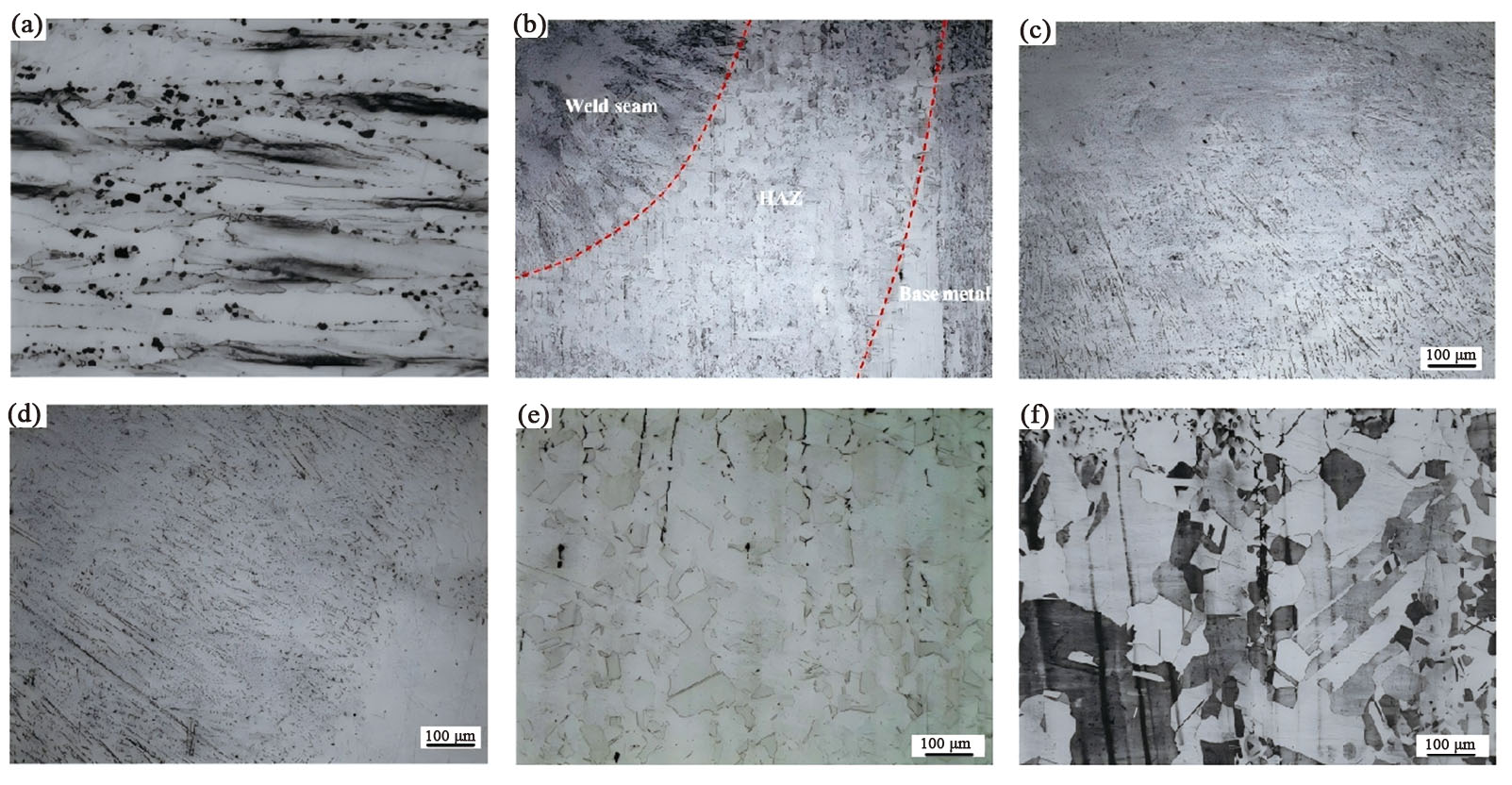
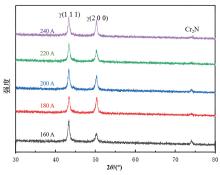
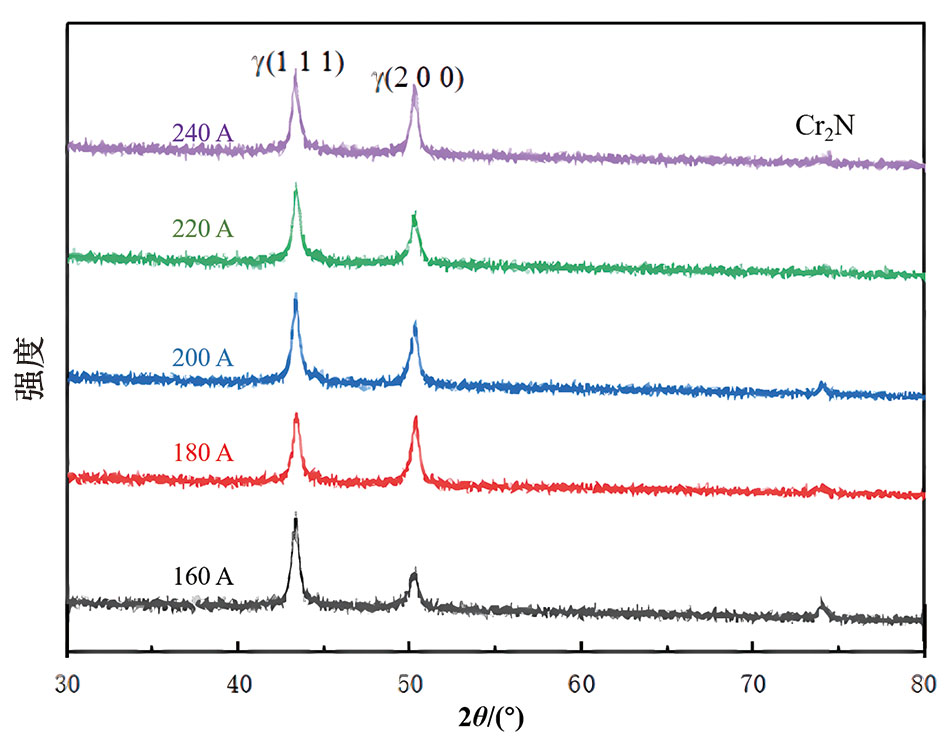
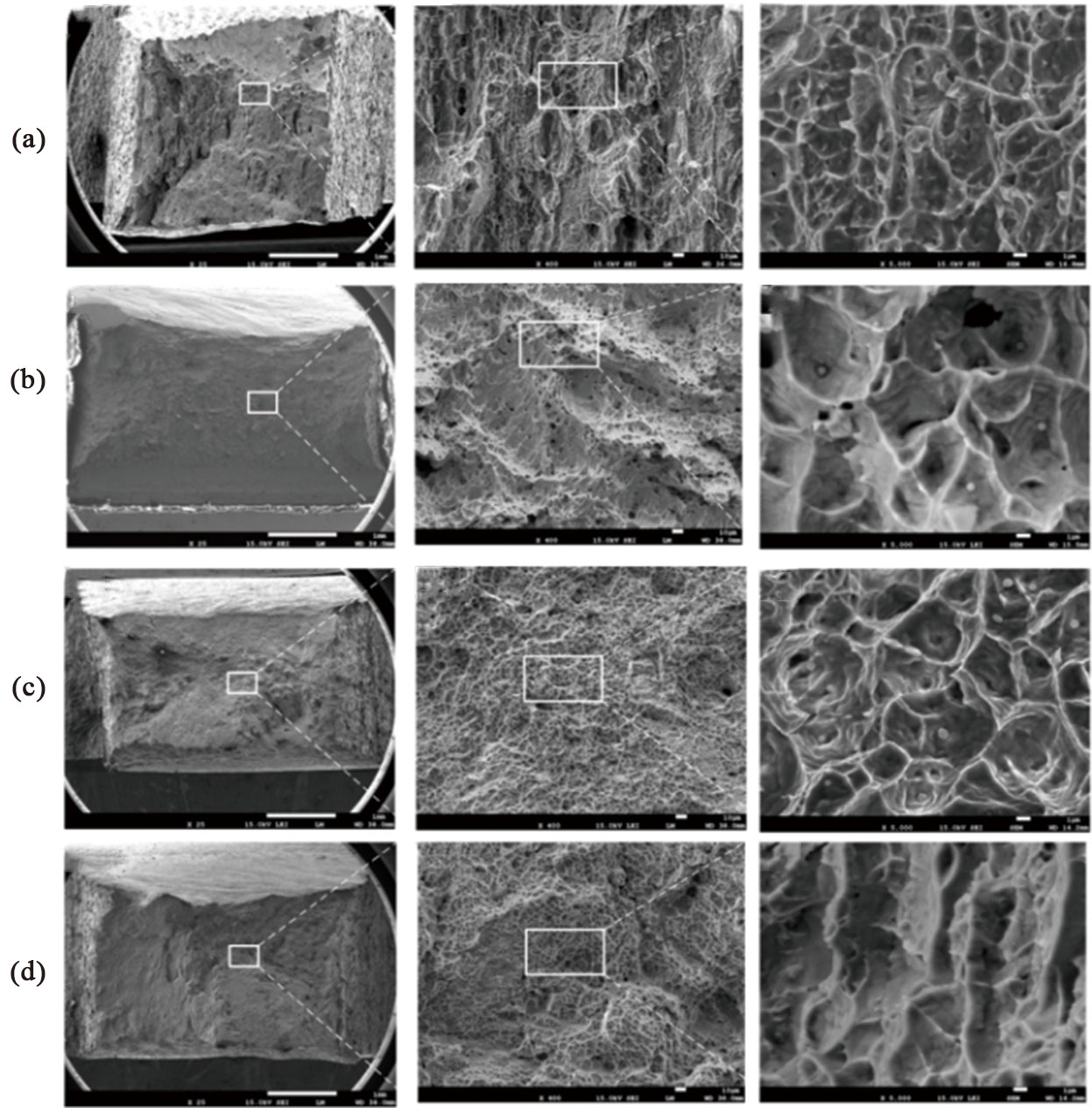
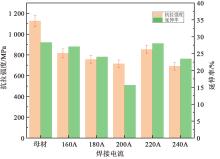
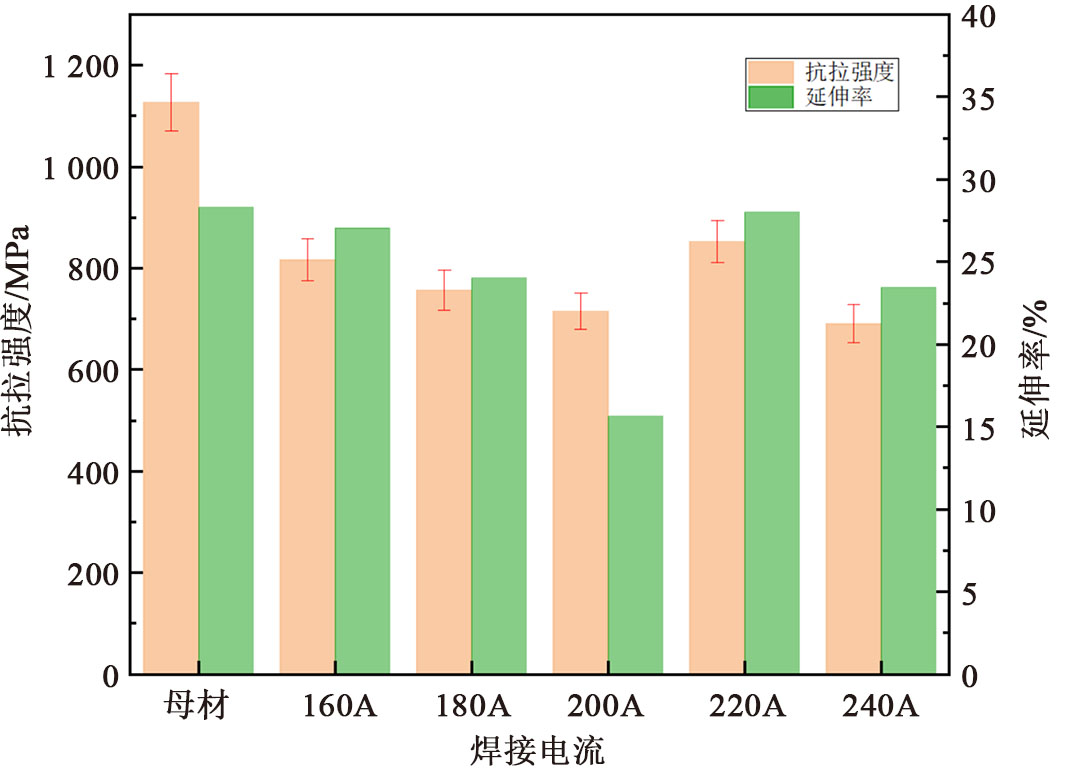
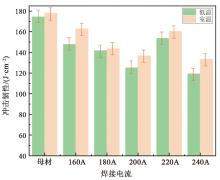
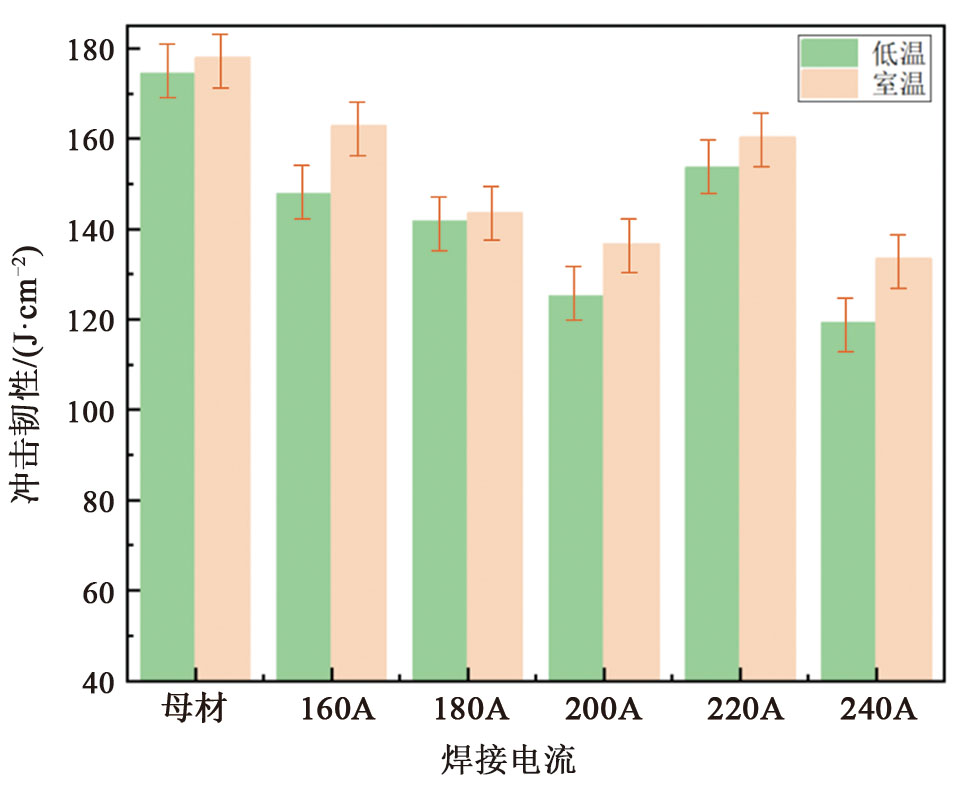
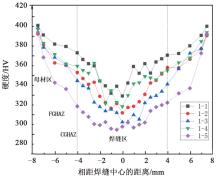
针对高氮奥氏体不锈钢焊接过程中组织稳定性与力学性能匹配问题,采用非熔化极惰性气体钨极保护焊TIG自熔对接焊工艺,在焊接速度和保护气体条件保持恒定的前提下,以焊接电流为主要变量,系统研究其对焊接接头组织分区特征、Cr2N氮化物析出行为及力学性能演化规律的影响。结果表明,焊接接头均形成焊缝区、粗晶热影响区和细晶热影响区的典型组织结构,焊接电流显著影响各区域的晶粒特征与组织均匀性。X射线衍射分析显示,在160~200 A条件下焊缝中可检测到Cr2N析出,而当焊接电流提高至220 A及以上时,Cr2N衍射峰明显减弱直至消失。结合焊接热循环特征分析认为,较高焊接电流通过改变焊缝区域在Cr2N析出敏感温区的有效停留时间,对氮化物析出过程形成动力学抑制。力学性能测试结果表明,焊接接头的抗拉强度和冲击韧性随焊接电流变化呈现先降低、后升高再降低的非单调规律,其中在220 A条件下接头获得较优的强韧性匹配。研究表明,焊接电流通过调控Cr2N析出行为及组织梯度特征,对高氮奥氏体不锈钢焊接接头的组织稳定性与力学性能具有关键影响。

关键词: 高氮钢, TIG焊, 微观组织, 力学性能, 接骨钉, 医用材料

Abstract:

To address the compatibility issue between microstructure stability and mechanical property matching during the welding of high-nitrogen austenitic stainless steel, autogenous TIG butt welding was employed. With welding speed and shielding gas conditions kept constant, the welding current was used as the primary variable to systematically investigate its effects on the microstructural zoning characteristics, Cr2N nitride precipitation behavior, and the evolution of mechanical properties of the welded joints. The results reveal that the welded joints exhibit typical microstructural zones, including the weld zone, coarse-grained heat-affected zone, and fine-grained heat-affected zone. Welding current significantly affects the grain characteristics and microstructural uniformity in each zone. XRD analysis indicates that Cr2N is detectable in the weld metal at currents from 160 to 200 A, whereas when the welding current is increased to 220 A and above, the diffraction peaks of Cr2N are significantly weakened and eventually disappear. Based on the analysis of welding thermal cycles, this suggests that higher welding currents kinetically suppress the precipitation process of Cr2N by reducing the effective residence time of the weld zone within the critical temperature range sensitive to Cr2N precipitation. Mechanical property tests show that the tensile strength and impact toughness of the welded joints exhibit a nonmonotonic trend with increasing welding current—initially decreasing, then increasing, and finally decreasing again. Optimal strength-toughness matching was achieved at 220 A. Overall, welding current plays a critical role in regulating Cr2N precipitation behavior and microstructural gradient characteristics, thereby substantially affecting the microstructure stability and mechanical properties of high-nitrogen austenitic stainless steel welded joints.

Key words: high-nitrogen steel, TIG welding, microstructure, mechanical properties, bone nail, medical materials

中图分类号: 

  • TG44

开放获取 本文遵循知识共享-署名-非商业性4.0国际许可协议(CC BY-NC 4.0),允许第三方对本刊发表的论文自由共享(即在任何媒介以任何形式复制、发行原文)、演绎(即修改、转换或以原文为基础进行创作),必须给出适当的署名,提供指向本文许可协议的链接,同时表明是否对原文作了修改,不得将本文用于商业目的。CC BY-NC 4.0许可协议详情请访问 https://creativecommons.org/licenses/by-nc/4.0