山东科学

• 交通运输 •    

基于计算机视觉的两轮自行车检测方法研究

李冰1*,蒋瑞2   

  1. 1. 东北林业大学机电工程学院,黑龙江 哈尔滨150040; 2. 东北林业大学土木与交通学院,黑龙江 哈尔滨150040
  • 收稿日期:2025-05-26 接受日期:2025-06-19 上线日期:2026-01-08
  • 通信作者: 李冰 E-mail:great_libing@163.com
  • 作者简介:李冰(1978—),男,博士,副教授,研究方向为智能车辆环境感知技术、汽车智能检测技术和汽车节能与减排技术,E-mail:great_libing@163.com
  • 基金资助:
    国家重点研发计划(2017YFC0803901-2)、黑龙江省自然科学基金(E2017001

Bicycle-type vehicle detection method using computer vision

LI Bing1*, JIANG Rui2   

  1. 1. College of Mechanical and Electrical Engineering, Northeast Forestry University, Harbin Heilongjiang 150040, China; 2. College of Civil and Transportation Engineering, Northeast Forestry University, Harbin Heilongjiang 150040, China
  • Received:2025-05-26 Accepted:2025-06-19 Online:2026-01-08
  • Contact: LI Bing E-mail:great_libing@163.com

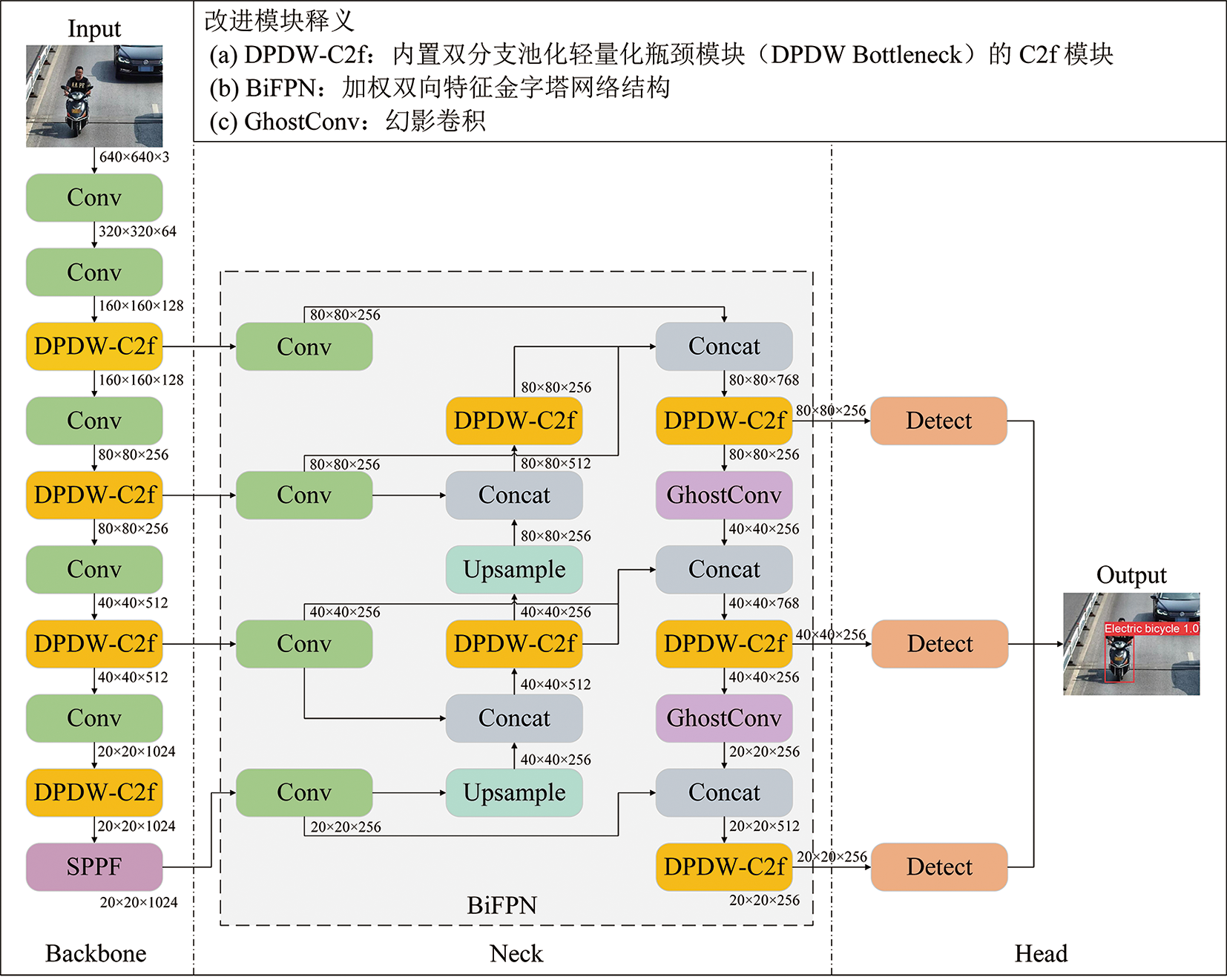
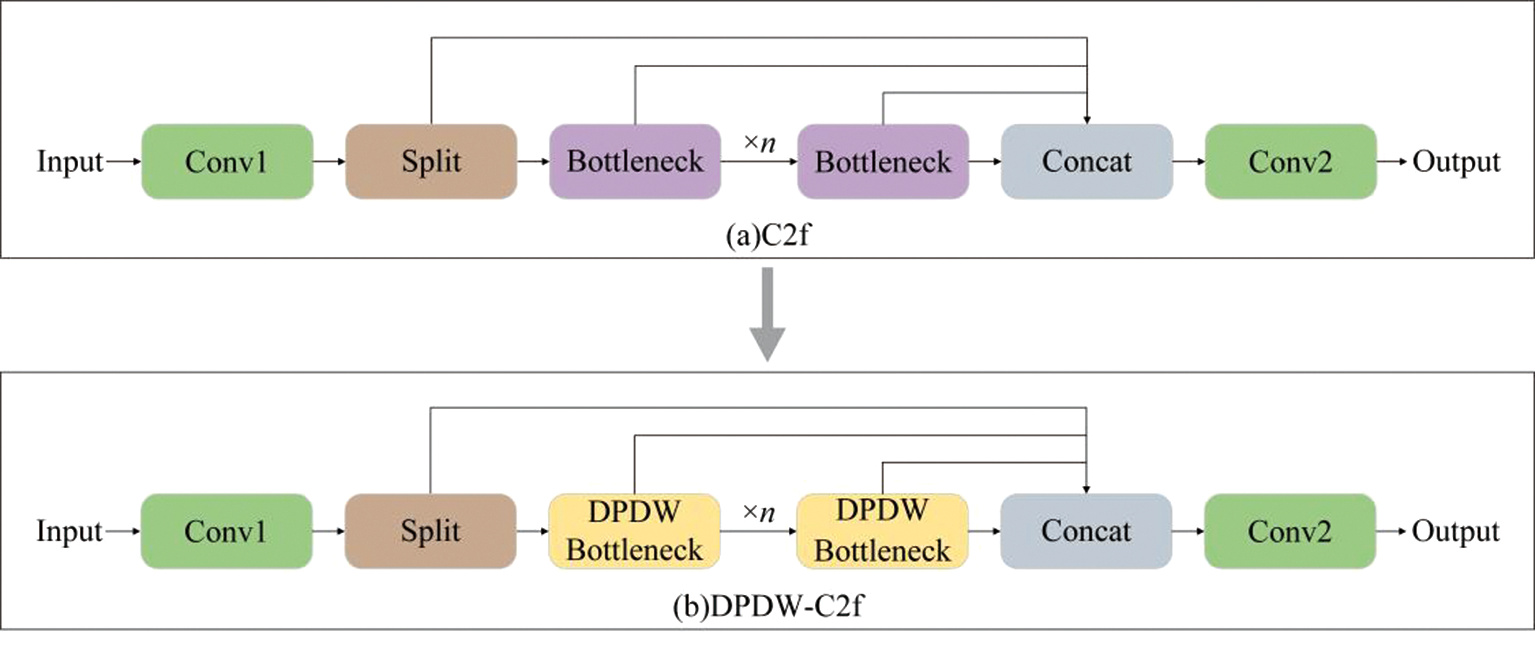
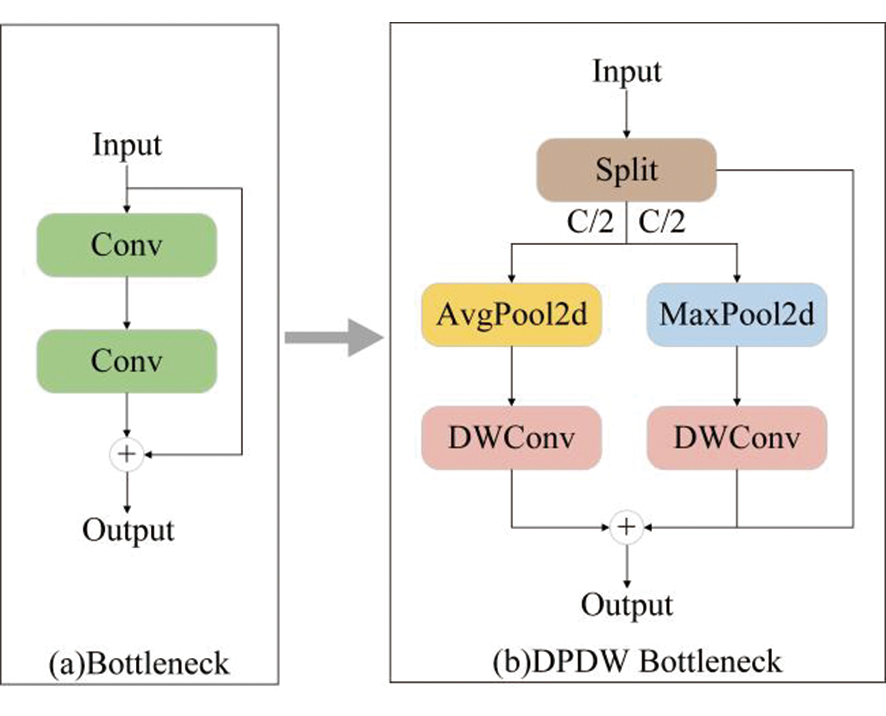
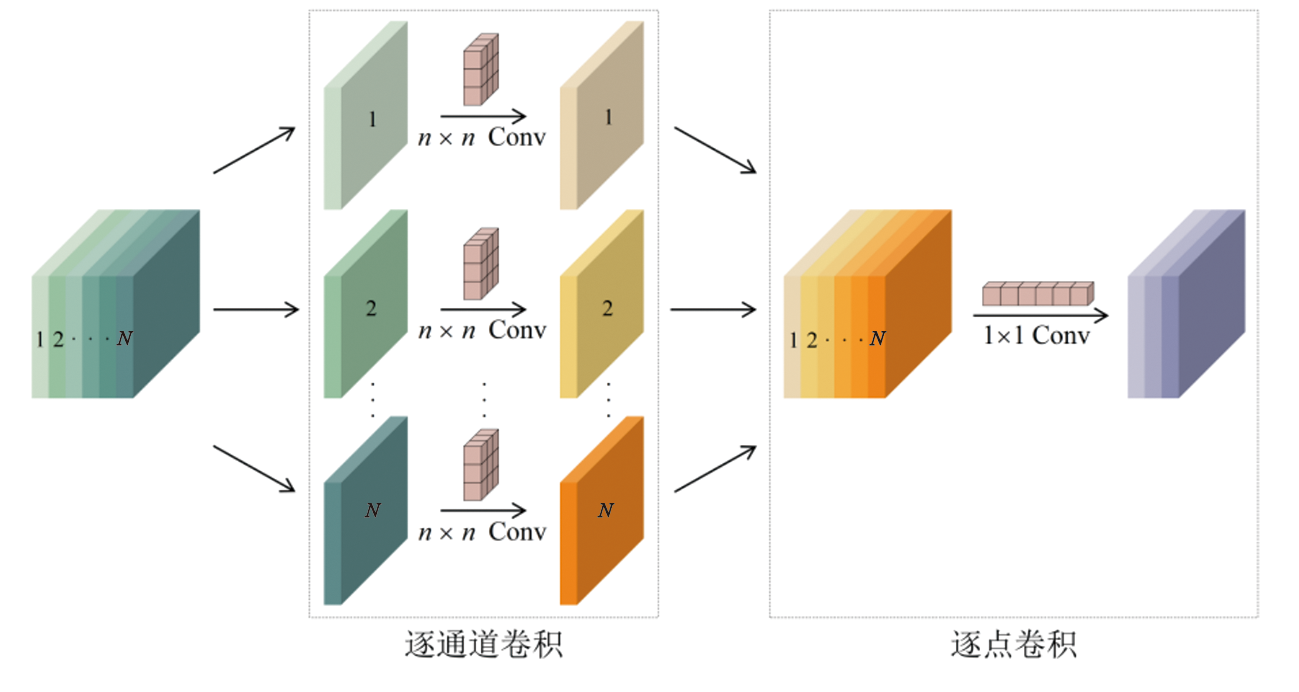
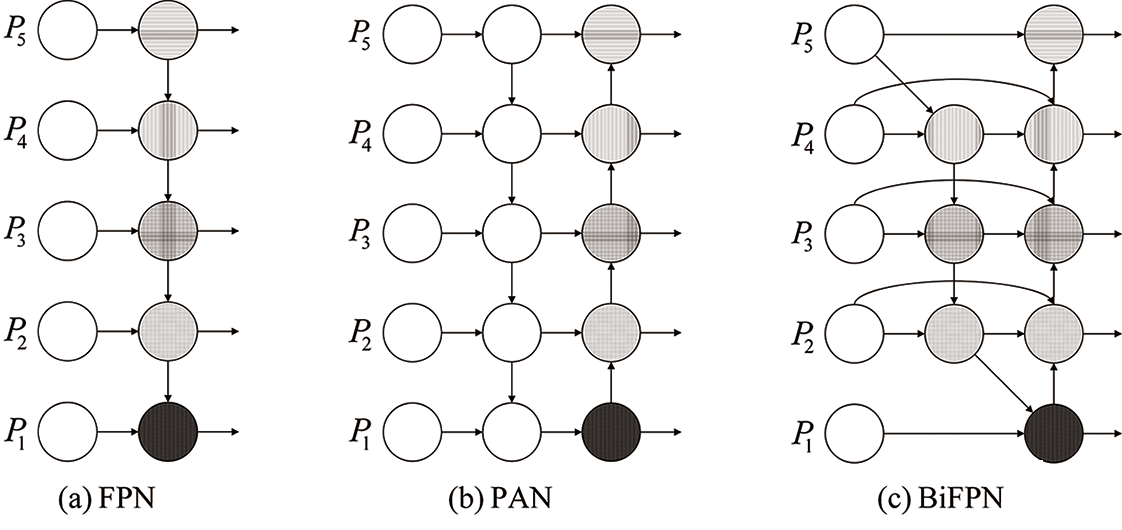
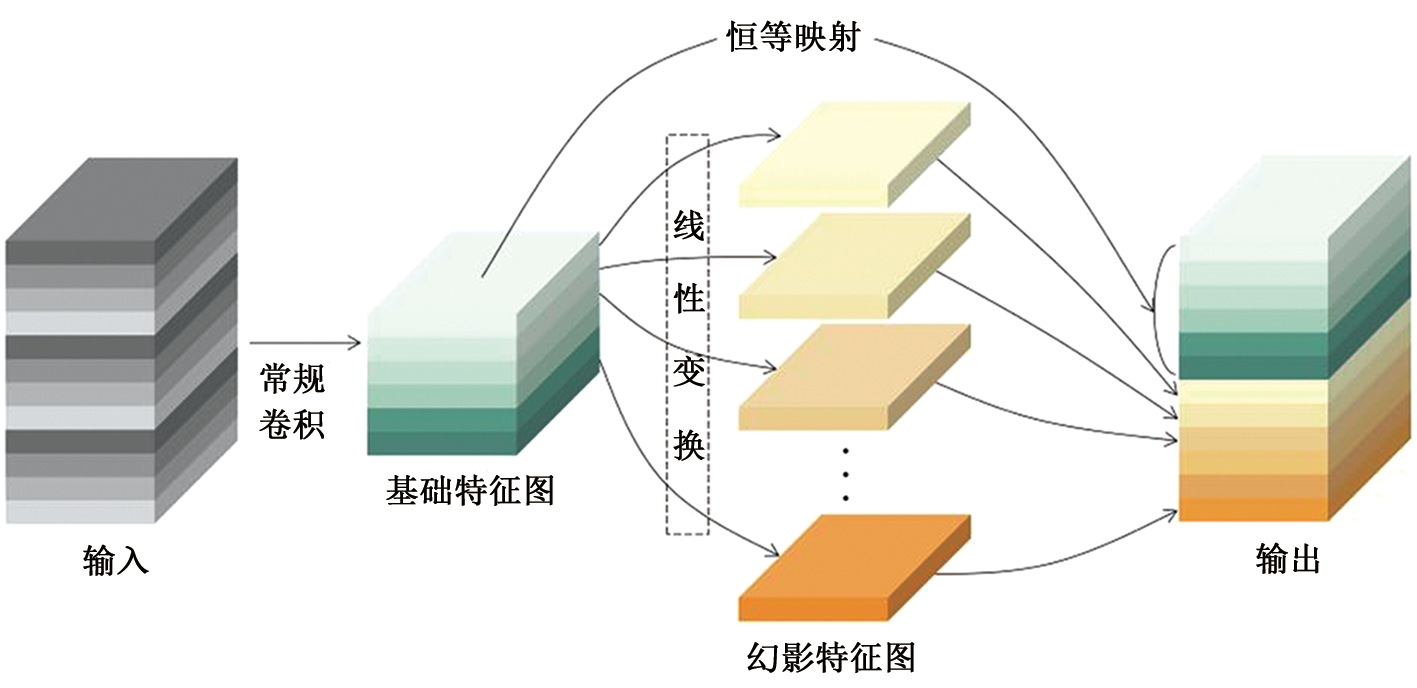
摘要: 针对当前两轮自行车检测模型面临目标尺度变化显著、环境干扰因素多、实时性要求高及检测精度与计算成本难以良好平衡的挑战,提出一种基于计算机视觉的轻量高效两轮自行车检测模型YOLO-DBG。首先,设计了全新的双分支池化轻量化瓶颈模块,通过差异化特征聚合策略同步提取两轮自行车的全局轮廓与局部细节特征,提升多尺度特征提取能力,并通过集成深度可分离卷积降低模型计算成本;其次,在颈部网络引入加权双向特征金字塔网络(Bidirectional Feature Pyramid Network, BiFPN)结构,利用双向跨尺度连接和动态加权机制强化对车辆关键部位的特征融合,并通过节点剪枝有效降低计算成本;此外,采用幻影卷积作为下采样算子,在维持特征表达能力的同时显著压缩模型。三者协同构建了有效的轻量化网络结构。实验结果表明,改进后模型的平均精度均值较原模型提升0.2%,参数量、计算量和模型大小分别减少55.8%、37.0%和53.1%。该方法在保障高检测精度的前提下,实现了理想的轻量化效果,为两轮自行车实时检测提供了新的解决方案。

关键词: 交通安全, 道路交通, 深度学习, 计算机视觉, 目标检测, 模型轻量化, 两轮自行车

Abstract: To address the challenges of significant scale variations, numerous environmental interferences, high real-time requirements, and the difficulty in achieving a good balance between detection accuracy and computational cost faced by existing bicycle-type vehicle detection models, this study proposes YOLO-DBG, a lightweight and efficient bicycle-type vehicle detection model based on computer vision. First, a novel dual-branch pooling & depthwise separable convolution bottleneck module is designed, which synchronously extracts global contour and local detail features of bicycle-type vehicles through a differentiated feature aggregation strategy, thereby enhancing multiscale feature extraction capabilities and reducing model computational costs by integrating depthwise separable convolution. Second, a weighted bidirectional feature pyramid network architecture is introduced in the neck network, which enhances the fusion of key vehicle features through bidirectional cross-scale connections and a dynamic weighting mechanism, and effectively reduces model computational costs through node pruning. In addition, ghost convolution is used as a downsampling operator, which considerably compresses the model while maintaining the feature expression ability. These three modules work together to construct an effective lightweight network architecture. Experiments demonstrate that the proposed model achieves a 0.2% increase in mean average precision while reducing parameters (Params), giga floating point operations per second, and model size (Model Size) by 55.8%, 37.0%, and 53.1%, respectively. The proposed method achieves ideal lightweighting without compromising detection accuracy, offering a novel solution for real-time detection of bicycle-type vehicles.

Key words: traffic safety, road traffic, deep learning, computer vision, target detection, model lightweighting, bicycle-type vehicles

中图分类号: 

  • U121

开放获取 本文遵循知识共享-署名-非商业性4.0国际许可协议(CC BY-NC 4.0),允许第三方对本刊发表的论文自由共享(即在任何媒介以任何形式复制、发行原文)、演绎(即修改、转换或以原文为基础进行创作),必须给出适当的署名,提供指向本文许可协议的链接,同时表明是否对原文作了修改,不得将本文用于商业目的。CC BY-NC 4.0许可协议详情请访问 https://creativecommons.org/licenses/by-nc/4.0