山东科学 ›› 2025, Vol. 38 ›› Issue (6): 22-28.doi: 10.3976/j.issn.1002-4026.2025050

• 海洋科技与装备 • 上一篇    下一篇

海洋精细化漂流浮标观测网络实验

李宾1(), 张文1,*(), 厉运周2, 赵强2, 徐登科1   

  1. 1.国防科技大学 气象海洋学院, 湖南 长沙 410073
    2.齐鲁工业大学(山东省科学院)海洋仪器仪表研究所, 山东 青岛 266061
  • 收稿日期:2025-05-09 修回日期:2025-05-26 出版日期:2025-12-20 上线日期:2025-10-14
  • 通信作者: 张文 E-mail:18873192712@163.com;zhangwen06@nudt.edu.cn
  • 作者简介:李宾(2004—),男,本科生。E-mail:18873192712@163.com
  • 基金资助:
    山东省重点研发项目(2023ZLYS01)

Experiment on a fine-scale marine drifting buoy observation network

LI Bin1(), ZHANG Wen1,*(), LI Yunzhou2, ZHAO Qiang2, XU Dengke1   

  1. 1. College of Meteorology and Oceanography, National University of Defense Technology, Changsha 410073, China
    2. Institute of Oceanographic Instrumentation, Qilu University of Technology (Shandong Academy of Sciences), Qingdao 266061, China
  • Received:2025-05-09 Revised:2025-05-26 Published:2025-12-20 Online:2025-10-14
  • Contact: ZHANG Wen E-mail:18873192712@163.com;zhangwen06@nudt.edu.cn

摘要:

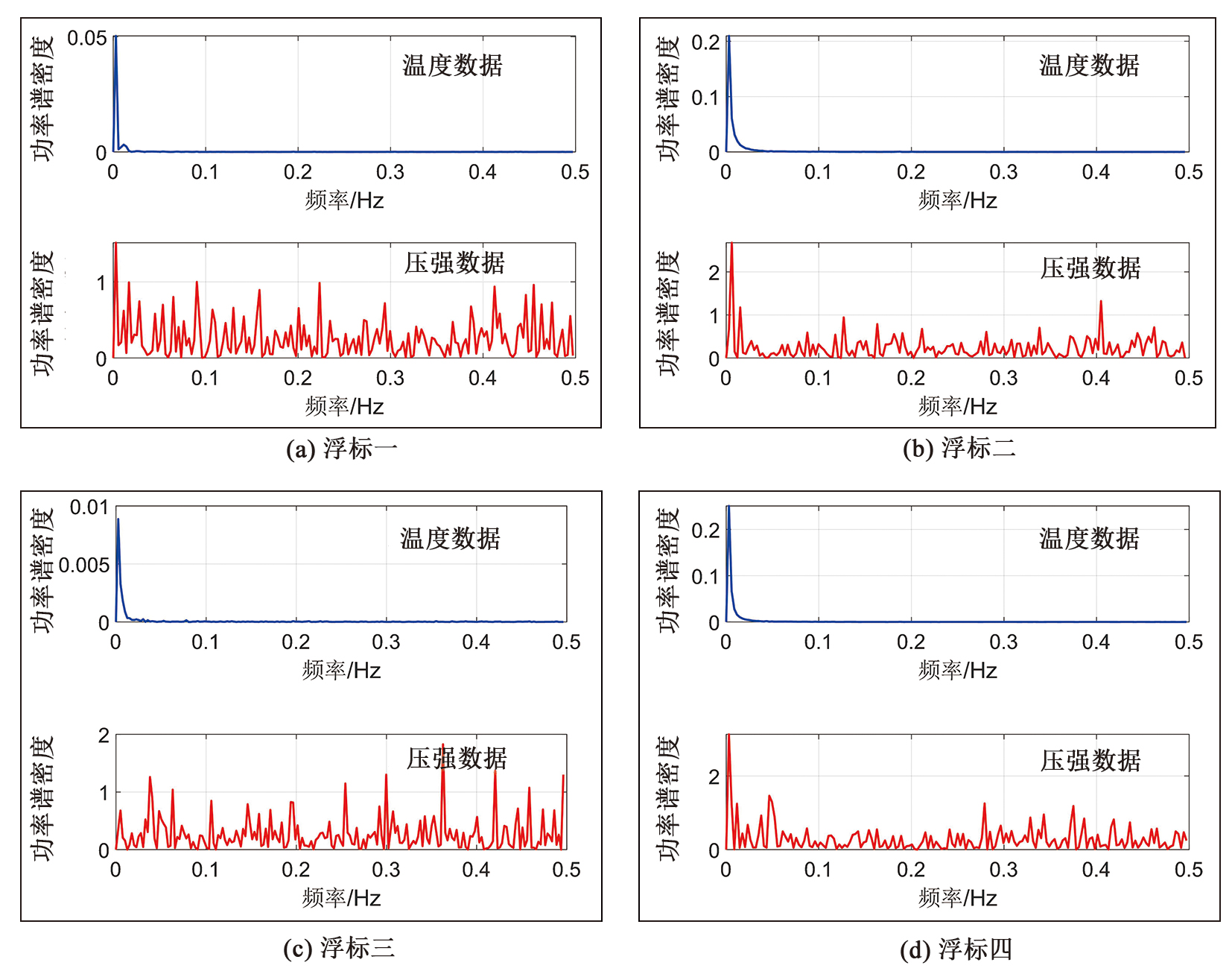
设计了一种创新型海洋精细化漂流浮标及其组网观测系统。浮标硬件采用自研分离式抗风浪结构与低功耗核心组件集成技术,结合双天线通信架构通过实验室测试和野外湖试,量化评估浮标的测量精度、环境适应性和数据稳定性。基于LoRa的分布式物联网通信技术,创新地采用拓扑组网架构,构建4节点10 km级立体观测网络,丢包率<0.1%,利用快速傅里叶变换(FFT)频谱分析数据特征并提出降噪方法。实验表明,该网络可同步捕获准稳态海洋环境数据,为高密度、立体化、精细化海洋监测提供可扩展解决方案。研究成果已应用于教学实践,并计划扩展至10节点网络,推动海洋精细化观测技术的工程化应用。

关键词: 海洋漂流浮标, 浮标观测网络, 物联网通信技术, LoRa无线通信技术

Abstract:

An innovative marine fine-scale drifting buoy and its networked observation system were designed. The buoy hardware featured a self-developed detachable wave-resistant structure and low-power core component integration technology. With the help of its dual-antenna communication architecture, the buoy was subjected to laboratory and field lake tests to quantitatively evaluate its measurement accuracy, environmental adaptability, and data stability. Based on LoRa-enabled distributed IoT communication technology, an innovative topological networking architecture was used to construct a four-node, 10 km-scale 3D observation network with a packet loss rate of less than 0.1%. FFT spectral analysis was conducted to analyze data features, and a noise reduction method was proposed. Test results showed that the network could synchronously capture quasi-steady-state ocean environmental data, providing a scalable solution for high-density, multi-dimensional, fine-scale ocean monitoring. The research results were applied in teaching practice. In addition, expansion to a 10-node network has been planned to advance the engineering application of fine-scale ocean observation technology.

Key words: marine drifting buoy, buoy observation network, Internet of Things communication technology, LoRa

中图分类号: 

  • P715.2

开放获取 本文遵循知识共享-署名-非商业性4.0国际许可协议(CC BY-NC 4.0),允许第三方对本刊发表的论文自由共享(即在任何媒介以任何形式复制、发行原文)、演绎(即修改、转换或以原文为基础进行创作),必须给出适当的署名,提供指向本文许可协议的链接,同时表明是否对原文作了修改,不得将本文用于商业目的。CC BY-NC 4.0许可协议详情请访问 https://creativecommons.org/licenses/by-nc/4.0