山东科学

• 能源与动力 •    

5MW风电基础混凝土浇筑温度特性研究

赵东煜,栗媛媛,焦炜,刁广智   

  1. 中国石油股份有限公司长庆油田分公司,陕西 西安 718600
  • 收稿日期:2025-03-21 接受日期:2025-04-28 上线日期:2026-03-23
  • 通信作者: 赵东煜 E-mail:zdy2024_cq@petrochina.com.cn
  • 作者简介:赵东煜(1998—) ,男,硕士,新能源工程师,研究方向为油气田开发、新能源、相分离机理。
  • 基金资助:
    中国石油天然气集团有限公司重点项目(CEDC127C-2023)

Temperature characteristics of concrete pouring for a 5-MW wind turbine foundation

ZHAO Dongyu, LI Yuanyuan, JIAO Wei, DIAO Guangzhi   

  1. PetroChina Changqing Oilfield Co. Ltd., Xi'an 718600, China
  • Received:2025-03-21 Accepted:2025-04-28 Online:2026-03-23
  • Contact: ZHAO Dongyu E-mail:zdy2024_cq@petrochina.com.cn

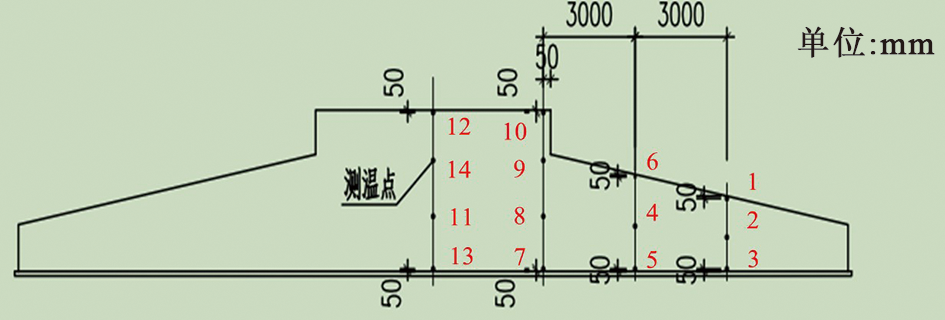
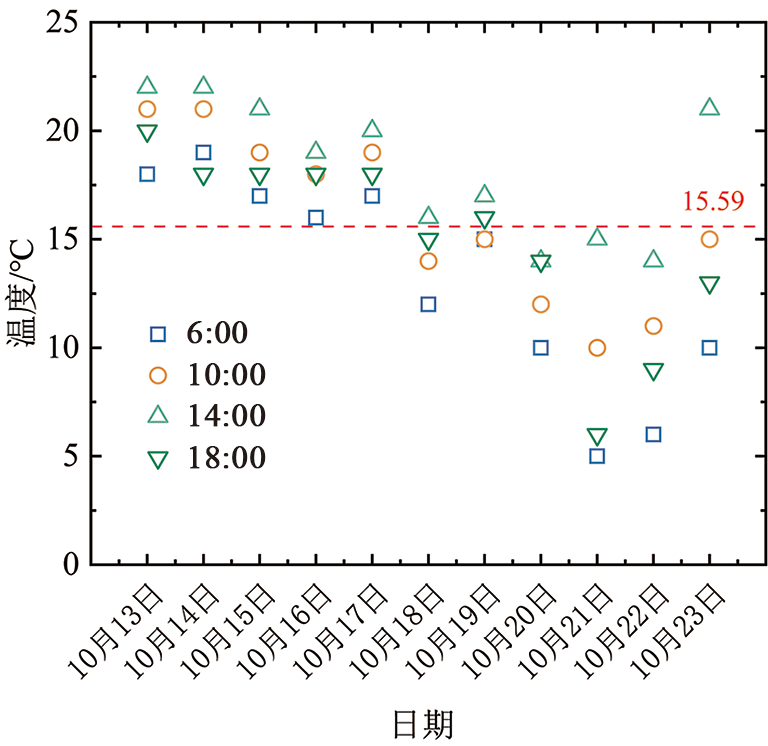
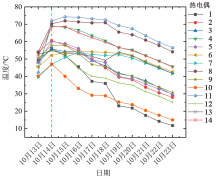
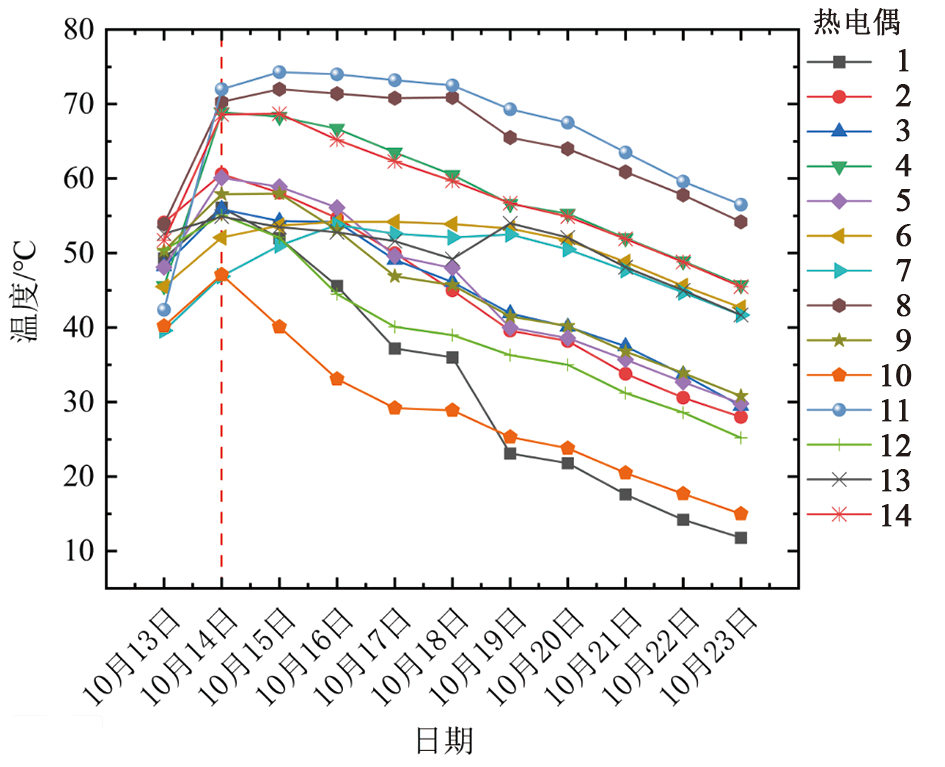
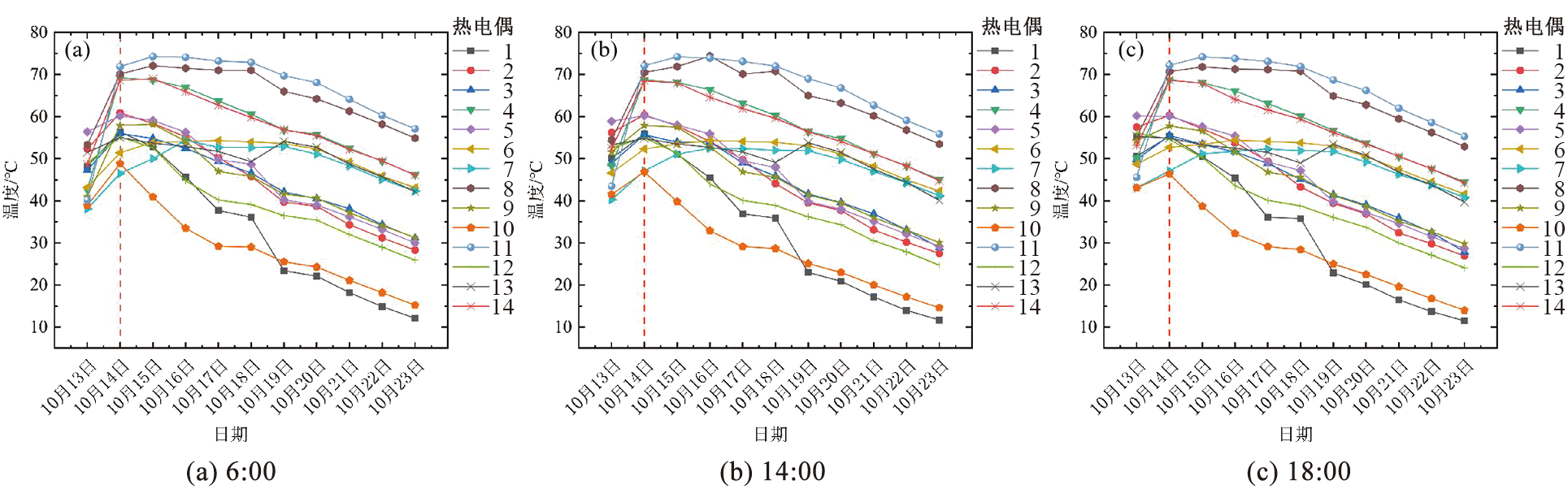
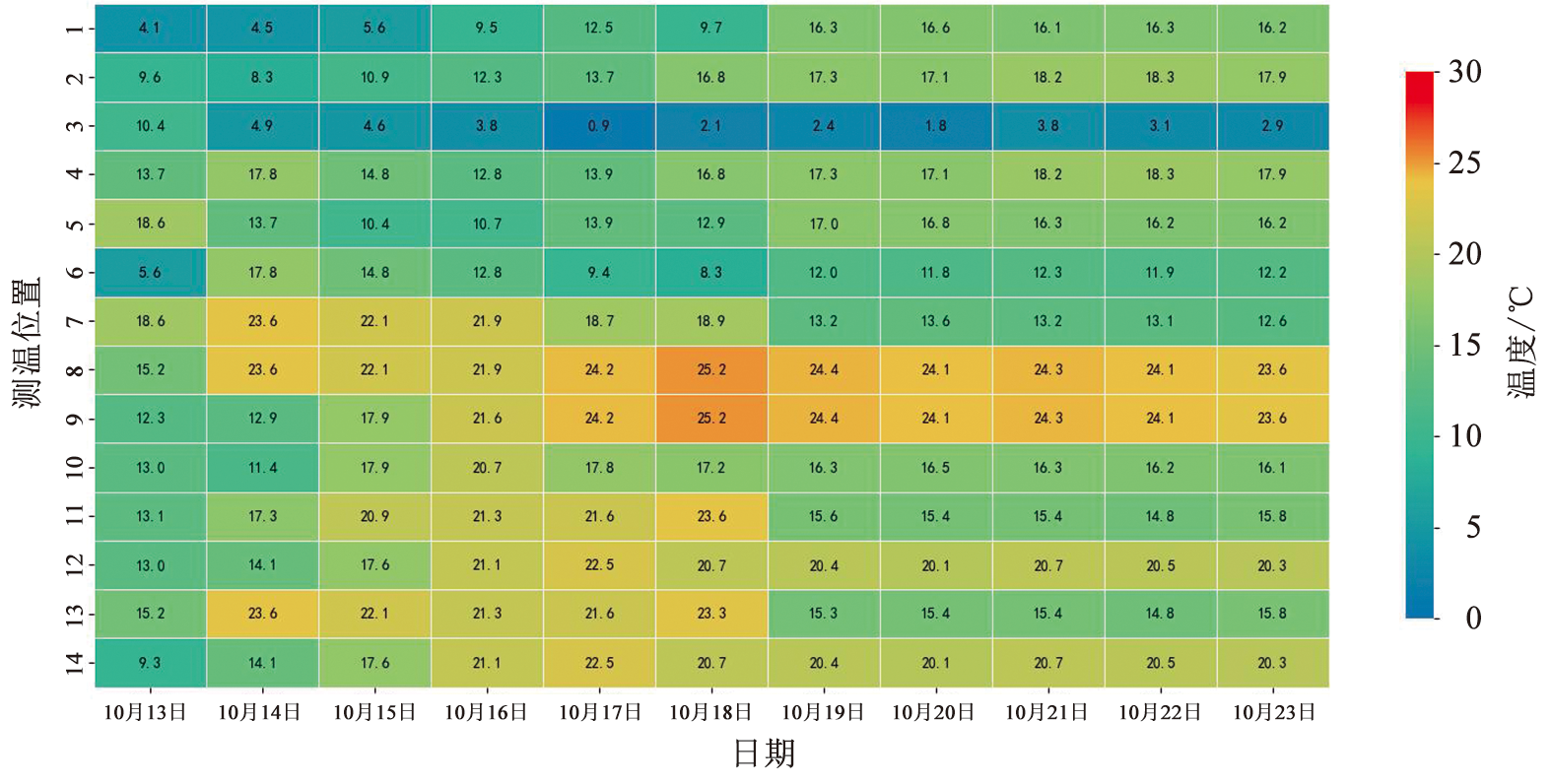
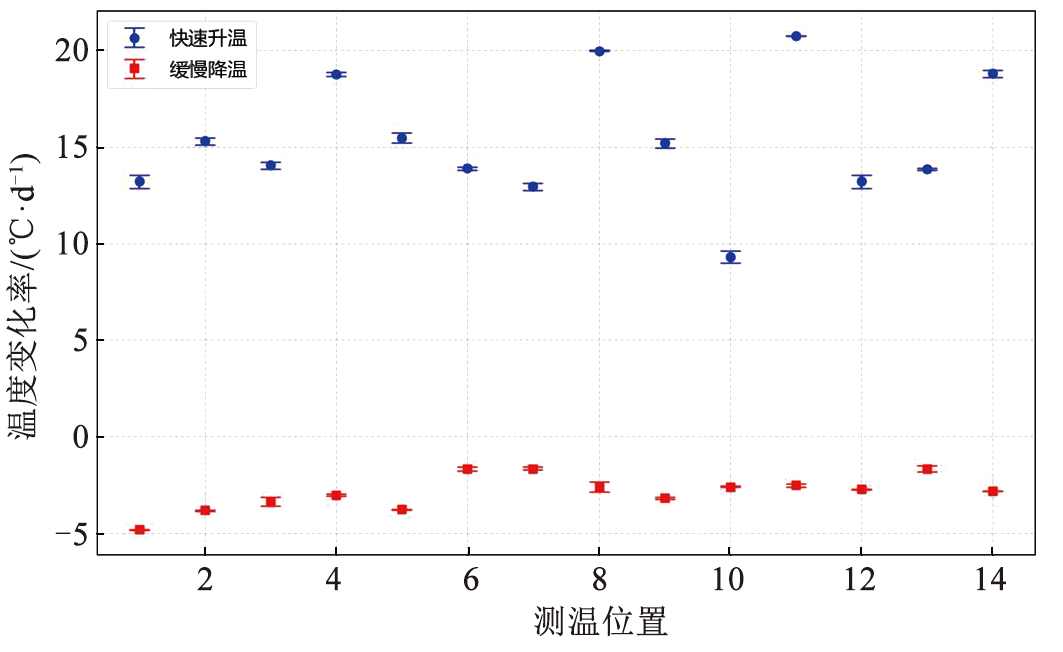
摘要: 大体积混凝土结构在大型基础设施工程中应用广泛,但浇筑后的温度裂缝问题严重影响结构耐久性,产生安全隐患。以长庆油田首台5MW风电基础为对象研究了大体积混凝土浇筑后的温度演化规律与空间分布特征,基于水化热释放与散热的动态平衡,温度演化分为快速升温、峰值维持和缓慢降温3个阶段。混凝土内部温度呈现显著的中心高、边缘低的空间异质性,中心区域最高温度达74.3 ℃,边缘区域受环境温度(5~23 ℃)影响显著。理论计算3 d龄期的大体积混凝土内外温差为30.15 ℃,通过塑料薄膜与麻袋覆盖的保温措施,浇筑后10 d内的最大温差仅为25.2 ℃,有效降低了温度裂缝风险。研究结果为类似环境下的大体积混凝土温度控制提供了理论依据和实践指导,提出的大体积混凝土浇筑后的几种保温措施,对提升风电基础等大型工程结构的耐久性具有重要意义。

关键词: 大体积混凝土, 温度裂缝, 温度演化, 空间分布, 保温措施, 风电基础

Abstract: Mass concrete structures are extensively used in large-scale infrastructure projects; however, temperature cracks after concrete pouring severely affect structural durability and pose safety risks. This study focuses on a 5-MW wind turbine foundation at the Changqing Oilfield, China, to investigate the temperature evolution and spatial distribution of mass concrete after pouring. Based on the dynamic balance between hydration heat release and heat dissipation, the temperature evolution of mass concrete can be divided into three phases: rapid heating, peak maintenance, and slow cooling. The internal temperature of the concrete exhibits a distinct spatial heterogeneity, with higher temperatures at the center and lower temperatures at the edges. The maximum central temperature reaches 74.3?°C, whereas the edge regions are considerably affected by ambient temperature(5~23 ℃). Theoretical calculations show that the temperature difference between the interior and exterior of the mass concrete after 3 days of pouring is 30.15℃. However, when plastic films and burlap are used as insulators, the maximum temperature difference within 10 days after pouring is only 25.2℃, thus indicating an effective reduction in the risk of temperature cracks. These findings offer theoretical and practical guidance for temperature control of mass concrete in similar environments, and the proposed insulation measures after pouring are critical for enhancing the durability of large-scale infrastructure projects, such as wind power foundations.

Key words: mass concrete, temperature cracks, temperature evolution, spatial distribution, insulation measures, wind turbine foundation

中图分类号: 

  • TK124

开放获取 本文遵循知识共享-署名-非商业性4.0国际许可协议(CC BY-NC 4.0),允许第三方对本刊发表的论文自由共享(即在任何媒介以任何形式复制、发行原文)、演绎(即修改、转换或以原文为基础进行创作),必须给出适当的署名,提供指向本文许可协议的链接,同时表明是否对原文作了修改,不得将本文用于商业目的。CC BY-NC 4.0许可协议详情请访问 https://creativecommons.org/licenses/by-nc/4.0